
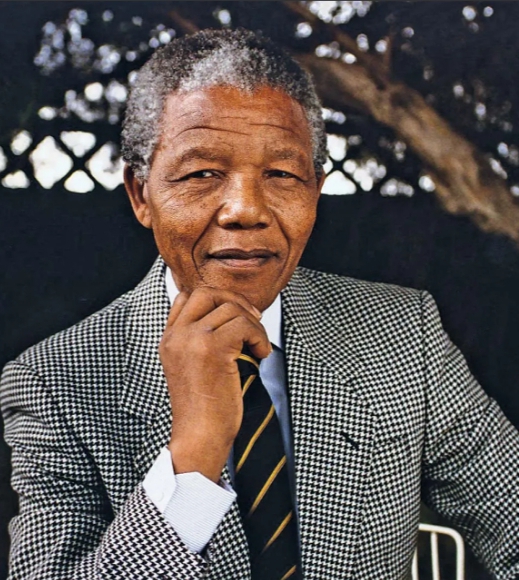
Some years ago, while pursuing my doctoral programme in Security and Strategic Studies, I wrote a seminar paper on Nelson Mandela as a global strategic leader. Like most seminar papers, it did its duty, attracted the attention required for academic survival, and then went quietly into retirement. Recently, I returned to it. The pages had aged. The question had not.
Indeed, the question seemed more urgent than when I first asked it. We live in an age in which political grievance travels faster than political wisdom. Compromise is easily denounced as weakness. Opponents are recast as enemies, elections are treated as wars, and public office, once acquired, can develop a surprisingly strong attachment to its occupant. Across the world, power is becoming louder while trust is becoming thinner. That was when Mandela walked back into my thoughts.
Why write about a South African leader who left office in 1999 and died in 2013? Certainly not because the world needs another wreath at the foot of his statue. Mandela has received enough reverence to supply several generations. The more useful reason is that his life confronts one of the hardest questions in politics: what should a leader do with victory after a long season of injury?
Defeating an unjust order is difficult. Preventing the defeated from destroying the peace, restraining the victorious from consuming it, and building a country in which both must live may be harder still. Mandela’s greatness lay not simply in surviving prison or becoming president. It lay in understanding that the skills required to fight an oppressive system are not always the same skills required to build a democratic state.
His journey began far from the marble halls in which global statesmen are usually photographed. Born Rolihlahla Mandela in 1918, he grew up in the rural Transkei, herding cattle and listening to the deliberations of traditional leaders. He later studied at Fort Hare, moved to Johannesburg, trained in law and joined the African National Congress. With Oliver Tambo, he established one of South Africa’s first Black law practices. The young lawyer soon discovered that apartheid was not a legal inconvenience waiting for a clever submission. It was an entire political and economic order built to ensure that the majority remained strangers in their own country.
Mandela first embraced mass mobilisation and civil disobedience. After peaceful avenues were progressively closed and the apartheid state intensified its violence, he helped establish Umkhonto we Sizwe and accepted sabotage as part of the struggle. This part of his life is sometimes quietly removed from the popular portrait, perhaps because saints are easier to display when they carry no complicated luggage. But Mandela was not born as the smiling grandfather of reconciliation. He was a political organiser who learned, sometimes painfully, that leadership requires both conviction and the willingness to revise one’s methods.
At the Rivonia Trial in 1964, facing the possibility of death, he declared his commitment to a democratic and free society in which all persons would live together in harmony and with equal opportunities. He was sentenced to life imprisonment. The apartheid government intended to remove him from history. Instead, it placed him in a twenty seven year workshop where his moral authority was slowly manufactured at the state’s expense.
Prison did not automatically make Mandela great. Suffering does not always ennoble; sometimes it merely wounds. What distinguished him was what he did with confinement. On Robben Island, he studied the language, history and fears of his oppressors. He learned Afrikaans, read Afrikaner political thought and engaged his warders as human beings. This was not surrender. It was intelligence. Mandela understood that if he wished to negotiate South Africa out of disaster, he needed to know not only what his people desired but also what the other side feared.
That is a lesson many leaders miss. They know their supporters’ applause but not their adversaries’ anxieties. They enter negotiation carrying only half a map and then express surprise when they get lost.
Mandela’s empathy did not dilute his purpose. When President P. W. Botha offered him conditional freedom if he renounced violence, Mandela refused. Personal liberty was not enough while his people’s organisation remained banned and their political rights denied. He recognised a bargain designed to free the prisoner while keeping the prison system intact. It was a generous offer only if one ignored the invoice.
Yet the same Mandela who refused a compromised release later opened secret discussions with representatives of the apartheid government. At first glance, the two positions might appear inconsistent. They were not. His objective remained a non racial democracy; his method changed as the political environment changed. That is the heart of strategy. Strategy is not the stubborn preservation of yesterday’s tactics. It is the disciplined protection of tomorrow’s purpose.
When Mandela emerged from prison on 11 February 1990, South Africa was not waiting outside with flowers and a completed peace agreement. The country was armed, fearful and violent. Black South Africans had suffered generations of humiliation and dispossession. White South Africans feared the loss of power, privilege and perhaps personal security. Political killings continued even as negotiations began. Everyone wanted a new South Africa, although they did not necessarily want the same one.
Mandela now faced a double assignment. He had to convince the oppressed majority that reconciliation was not another name for surrender. At the same time, he had to convince the white minority that majority rule did not mean organised revenge. He could not split the difference between equality and apartheid; there was no honourable midpoint. Instead, he held firmly to political equality while negotiating the protections and procedures that made democratic change less frightening to those who had benefited from the old order.
His relationship with F. W. de Klerk captured this delicate dance. The two men shared the 1993 Nobel Peace Prize, but they were not political twins joined together by a ceremony. They quarrelled, distrusted aspects of each other’s conduct and nevertheless understood that neither could deliver a stable transition alone. History sometimes moves forward not because opponents become friends, but because they finally agree that they must share a country.
Mandela’s most memorable instruments were not always laws or speeches. He possessed an unusual understanding of symbolism. He knew that nations live not only by constitutions and budgets, but also by stories, gestures and the small theatre of public life.
At the 1995 Rugby World Cup final, he appeared in the green Springbok jersey, long associated with white Afrikaner identity and, for many Black South Africans, with exclusion. When he presented the trophy to captain Francois Pienaar, Mandela did more than celebrate a sporting victory. He recruited an old symbol into a new national story. It may remain the only occasion on which a rugby shirt performed part time duties as a ministry of national integration.
He invited former prison warders to his inauguration, met former adversaries and visited Betsie Verwoerd, widow of Hendrik Verwoerd, one of apartheid’s principal architects. These gestures were often described as kindness. They were also statecraft. Mandela was reducing fear among whites while setting a standard of restraint for the Black majority. His forgiveness was not forgetfulness, and it was certainly not weakness. It was the deliberate refusal to allow yesterday’s oppressors to dictate the moral character of tomorrow’s state.
The Truth and Reconciliation Commission carried the same ambition into public life. It allowed victims to tell their stories, exposed atrocities and offered conditional amnesty in exchange for full disclosure. It also had serious limitations. Some victims saw amnesty as justice denied. Reparations were inadequate, while many who benefited materially from apartheid escaped meaningful accountability. Reconciliation without economic transformation can become an eloquent ceremony held in a very unequal room.
That criticism matters. Mandela helped secure political freedom, but he did not dissolve the inherited concentrations of land, wealth and opportunity. South Africa entered democracy with one of the world’s most unequal social structures, and the distance between political emancipation and economic inclusion remains painfully visible. Mandela built the bridge from apartheid to democracy. The mistake was not that he built the bridge; it was the later assumption that the bridge was the destination.
Nor did Mandela liberate South Africa alone. Heroic stories are attractive because they spare us the trouble of remembering the crowd. Oliver Tambo sustained the ANC in exile. Walter Sisulu organised and mentored. Trade unions, students, community leaders, international allies and millions of ordinary South Africans carried the struggle through sacrifices that attracted no cameras. Even de Klerk’s decision to unban the liberation movements and negotiate mattered. Mandela was an exceptional conductor, but there was an orchestra and some of its members played while bleeding.
Perhaps Mandela’s most important act came without a dramatic speech or stadium crowd. He left office after one presidential term. This is often treated as a pleasant footnote, when it should be read as a central part of his statecraft. Liberation movements can easily confuse historical legitimacy with permanent entitlement. Mandela understood that the authority earned in struggle did not amount to ownership of the state.
Africa has never lacked leaders who consider themselves indispensable. The shortage has been leaders willing to test the proposition. Mandela left and became larger rather than smaller. Power, it turns out, is one of the few possessions that may appreciate when surrendered at the right time.
This is why Mandela matters now. His life reminds us that leadership is not the ability to occupy the stage indefinitely. It is the ability to define a just destination, adapt intelligently to difficult terrain, persuade former adversaries to invest in a shared future, and leave behind institutions capable of surviving the leader’s departure. A leader who cannot imagine the institution without himself has not built an institution. He has built an audience.
Mandela was not perfect, and South Africa’s journey remains unfinished. His settlement prevented catastrophe; it did not abolish inequality. His reconciliation created political space; it did not settle every claim of justice. But he understood something that many leaders never learn: defeating an enemy and building a country are different assignments. The habits that win the first can destroy the second if they are not revised.
I returned to my old seminar paper expecting to revisit a remarkable man. I found instead a contemporary warning. In an age of angry politics, personalised power and leaders who behave as though succession were a medical emergency, Mandela’s quiet discipline remains radical. He fought power, acquired power, humanised power and then surrendered it.
That may be the most enduring lesson of his long walk. The highest use of power is not to possess the future, but to make a better future possible for others.
“Suleyman A. Ndanusa, PhD, OON, is an economist, lawyer, strategic studies scholar, and public policy thinker and practitioner with extensive experience in financial markets, regulation, governance, national Security and development.”