
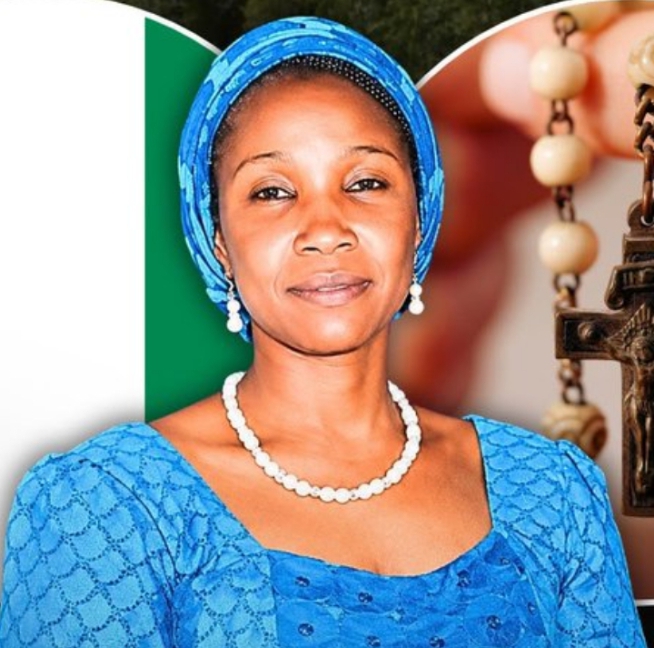
“No one forced me. I converted to Christianity voluntarily” – ex-Muslim woman
By Sanni Abdullahi
A Christian mother, Liyatu Samuel Dawa, from Gwoza in Nigeria’s northeastern Borno State, has been sentenced to 14 years in prison following a case involving a Muslim woman who converted to Christianity, in a verdict that has sparked fresh concerns over religious freedom and the treatment of Christians in northern Nigeria.
Dawa was convicted by a Borno State High Court presided over by Judge A. B. Kumdila, who imposed concurrent prison sentences carrying a maximum term of 14 years, without the option of paying a fine.
The case centred on allegations that Dawa played a role in influencing a Muslim woman to abandon Islam and embrace Christianity.
During the proceedings, the converted woman herself testified in court that she had embraced Christianity voluntarily and had not been pressured or forced by anyone to change her faith.
Despite her clear testimony that the conversion was voluntary, the court proceeded to convict Dawa.
Dawa, who maintained her innocence throughout the trial, told the court that her only involvement was offering advice to the woman.
“I only gave her advice. That’s all,” she said.
The judgment has been described by Christian leaders and human rights advocates as a worrying signal for freedom of religion and freedom of conscience as guaranteed under the Nigerian Constitution, which provides that every person shall be entitled to freedom of thought, conscience and religion, including freedom to change his religion or belief.
The case has also drawn attention to the plight of Dawa’s family. Her husband, evangelical Christian Amos Suleman, spent several months in prison before being released on bail in connection with the same matter.
Suleman says he is now living in hiding after receiving death threats from Islamist extremists following the case.
The couple, who are from Gwoza, an area that has suffered years of Boko Haram insurgency and religious tensions, have reportedly faced intense pressure from extremist elements since the matter came to public attention.
Gwoza, located in southern Borno State near the border with Cameroon, was once occupied by Boko Haram terrorists and remains a sensitive flashpoint for religious and ethnic tensions.
Right activists say the verdict raises critical questions about the application of justice in cases involving religious conversion in parts of northern Nigeria, where converts from Islam to Christianity often face persecution, threats and legal challenges despite constitutional protections.
International religious freedom organisations have repeatedly flagged Nigeria as a country where Christians face severe persecution, especially in the North-East and Middle Belt, through attacks by terrorist groups, mob violence and discriminatory practices.
Legal experts have also noted that while Nigeria is a secular state, the concurrent operation of Sharia law in some northern states has created complexities in cases involving religious conversion, particularly when a Muslim converts to another faith.
As of the time of filing this report, it was not clear whether Dawa’s legal team intends to appeal the judgment at the Court of Appeal in Jos or Maiduguri.
Supporters of the family are calling on the Borno State government, the Federal Government, the Christian Association of Nigeria, CAN, and international human rights bodies to intervene and ensure that Dawa receives a fair hearing on appeal.
They also called for protection for Amos Suleman, who they say remains at risk due to the death threats against him.
The case continues to generate reactions on social media and among faith-based organisations, with many demanding a review of the sentence and stronger safeguards for the constitutional right of every Nigerian to choose and practice the religion of their choice without fear of imprisonment or persecution.