
By Kehinde Jacobs
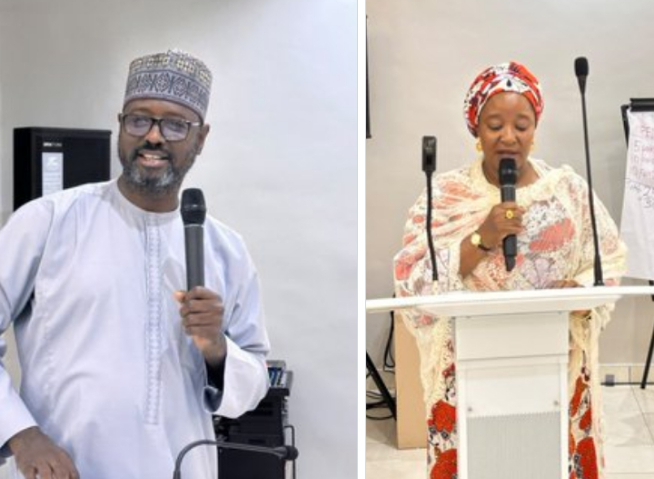
The Independent National Electoral Commission (INEC) has taken another major step towards ensuring a credible and well-managed 2027 General Election with the commencement of a three-day capacity-building workshop for key departmental heads from its State offices and the Federal Capital Territory (FCT).
The workshop, titled “Capacity-Building Workshop for Heads of Departments on Effective Management of the 2027 General Election,” opened on Monday, 9 November 2026, at Villa Park Hotel and Suites, Gudu, Abuja.
Participants at the training include Heads of Departments in Electoral Operations, Information and Communication Technology (ICT), Election and Party Monitoring (EPM), and Legal Services — four departments widely regarded as the engine room of election administration in Nigeria.
According to the Commission, the programme is part of its sustained efforts to strengthen institutional capacity and enhance effective management of the 2027 General Election.
The workshop is designed to update the knowledge, skills and professional competencies of participants, and to equip them with the leadership, managerial and technical capacity required to effectively coordinate the implementation of the Commission’s electoral policies, processes and procedures.
In an era where elections are increasingly shaped by technology, legal complexities, political party dynamics and rising public expectations, INEC said the training has become necessary to ensure that its managers at the state level are fully prepared for the task ahead.
Declaring the workshop open, the Acting Director-General of The Electoral Institute (TEI), Professor Ibrahim Sani, described the Heads of Departments as the operational backbone of the Commission, given their critical responsibility for translating its policies and directives into practical implementation.
Professor Sani noted that while policies are formulated at the headquarters in Abuja, it is the Heads of Departments in the states and the FCT who drive implementation on the ground, coordinate staff, manage logistics, engage stakeholders and respond to emerging challenges during elections.
He urged participants to translate the knowledge and skills acquired during the workshop into practical, well-structured and measurable activities that would contribute to the successful conduct of the 2027 General Election.
Professor Sani emphasized the importance of effective leadership, coordination and professional competence in delivering the Commission’s electoral responsibilities, stressing that the credibility of any election depends largely on the quality of preparation and the professionalism of those who manage the process.
Also present at the opening ceremony were the Directors of Training, Electoral Operations, Legal Drafting and Clearance, Litigation and Prosecution, Information and Communication Technology, and Election and Party Monitoring.
Their presence, according to officials of the Commission, underscored the interdepartmental nature of election management and the need for synergy among departments that must work together before, during and after elections.
Sources at the workshop disclosed that sessions will cover critical areas such as election planning and operations, result management, ICT deployment, voter education support, monitoring of political parties, legal compliance, handling of election petitions and litigation, as well as crisis management and leadership in high-pressure environments.
Participants are also expected to engage in group discussions, case studies and experience-sharing sessions, drawing from lessons learnt in previous elections, including the 2023 General Election and subsequent off-cycle governorship elections and bye-elections.
The three-day workshop is expected to strengthen interdepartmental coordination, improve operational efficiency and enhance the capacity of election managers to deliver on the Commission’s mandate ahead of the 2027 General Election.
For INEC, the training is not just a routine exercise, but part of a broader early-preparation strategy to avoid the lapses that have characterized previous elections, such as late deployment of materials, poor coordination between departments, and weak communication with stakeholders.
At the end of the workshop, participants are expected to return to their respective states with action plans for cascading the training to lower-level staff and for strengthening departmental coordination at the state level.
The workshop continues until Wednesday, 11 November 2026.