

By Juan Zacky
The death of 26-year-old Brazilian tourist Juliana Marins on Indonesia’s Mount Rinjani has renewed urgent questions about trekking safety, guide accountability, and emergency response in one of Southeast Asia’s most popular yet perilous hiking destinations.
Marins, a young traveler from Brazil, was on an early morning trek up the active volcano on Lombok Island when she became separated from her group. According to accounts emerging from the incident, exhaustion forced her to stop. Her Indonesian tour guide reportedly instructed her to rest alone while the rest of the party continued ahead.
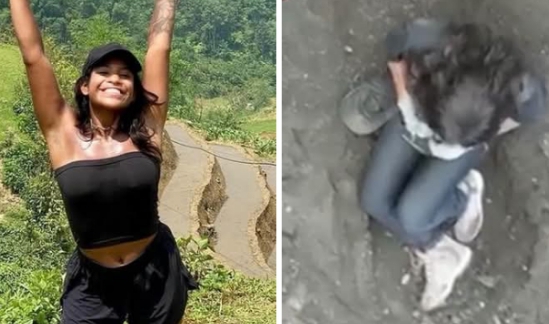
Minutes later, Marins slipped on the steep, unstable slope and fell hundreds of meters down the mountainside. The drop placed her on a narrow, treacherous ledge far below the main trail. Drone footage captured in the aftermath showed her alive but injured, trapped on the ledge and calling for help. The images, now the last known of the young tourist, show the isolation and danger of the terrain she was forced to endure.
Rescue teams were alerted and confirmed her location quickly. But reaching her proved far more difficult. Mount Rinjani, which rises 3,726 meters above sea level, is known for sudden fog, loose volcanic rock, and near-vertical drops. Those conditions turned a rescue operation into a multi-day ordeal. Fog reduced visibility to near zero at times, while the deadly terrain slowed climbers and rigging teams as they descended toward Marins’ position.
By the time rescuers reached her, Juliana Marins was dead. An autopsy later determined the cause of death as severe trauma and internal bleeding resulting from the fall. The findings confirmed what rescuers feared: the injuries sustained in the initial plunge were not survivable without immediate medical intervention.
Mount Rinjani is the second-highest volcano in Indonesia and a bucket-list destination for trekkers worldwide. Its crater lake, Segara Anak, and sunrise views draw thousands of tourists each year. But the same features that make it spectacular also make it dangerous. The trail includes steep ascents, loose scree, and sections with little to no safety barriers. Weather can shift within minutes, and nighttime temperatures drop sharply.
Tour operators frequently run overnight treks that begin in the pre-dawn hours to reach the summit for sunrise. Those early starts, combined with altitude and fatigue, create conditions where accidents can happen quickly. Marins’ case highlights what can occur when a trekker becomes separated from the group, even briefly.
The detail that Marins was left to rest alone while the group moved on has drawn attention from Brazil’s foreign ministry, travel safety advocates, and the international hiking community. Standard trekking protocol in high-risk environments generally requires that no person be left alone, especially on unstable terrain and in low-visibility conditions. Guides are typically expected to either stay with an exhausted client or arrange for another group member to do so until the party can regroup safely.
Indonesian authorities have not released a full report on the guide’s actions, and investigations into tour operator practices are ongoing. The incident has prompted calls for stricter enforcement of safety standards, mandatory guide-to-client ratios, and clearer regulations about when a trek must be paused or turned back.
Rescue operations on Rinjani are among the most complex in Indonesia. The mountain has no roads to the summit, meaning all personnel and equipment must be carried in by foot. Helicopters have limited ability to operate due to altitude and wind. In Marins’ case, dense fog further delayed progress, forcing rescuers to move cautiously to avoid additional accidents.
The fact that drone technology located her quickly shows how far search capabilities have advanced. But technology alone cannot overcome geography. The gap between locating a victim and physically reaching them remains one of the biggest challenges in mountain rescue worldwide.
News of Marins’ death has been met with grief in Brazil, where she was remembered by family and friends as adventurous and full of life. Her final images, captured by a drone as she waited on the ledge, have circulated widely, sparking both mourning and debate about traveler responsibility and operator duty of care.
For Indonesia’s tourism industry, the tragedy is a stark reminder of the balance between promoting adventure travel and ensuring visitor safety. Mount Rinjani National Park officials have previously warned trekkers about weather risks and the need for proper preparation, but Marins’ death underscores how quickly conditions can turn fatal.
As investigations continue, Juliana Marins’ story is likely to influence how tour companies brief clients, how guides manage groups, and how quickly emergency teams can respond when seconds matter. For now, her death stands as a sobering example of nature’s power and the human cost when safety protocols fail.
Mount Rinjani remains open to hikers, but park officials urge all visitors to hire licensed guides, trek in groups, and turn back if conditions or health become compromised.
The mountains will still be there tomorrow. Juliana Marins will not.