
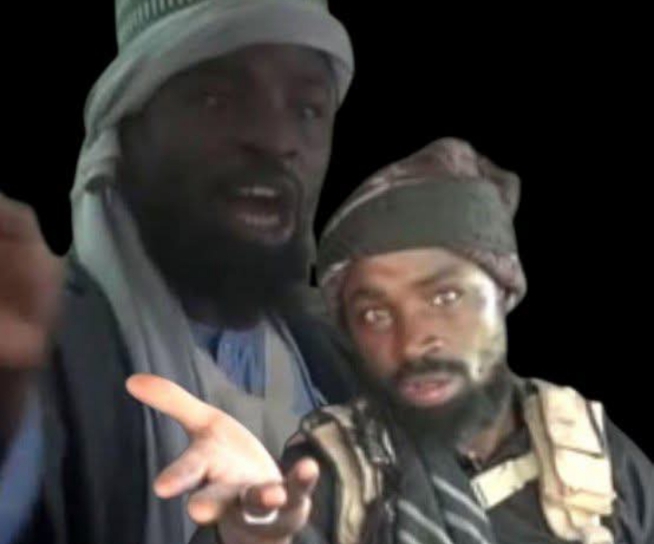
‘The repeated reports may have also affected morale on both sides. For troops, a declared kill that turns out false is demoralizing. For recruits, a leader who “cannot be killed” takes on mythic status’
By Ime Silas
Abubakar Shekau turned death announcements into a communications strategy, and for more than a decade, that strategy shaped how Nigerians understood the war against Boko Haram.
This analysis captures the core of the phenomenon. Between 2009 and 2016, Nigerian authorities announced Shekau dead or fatally wounded at least four times. Each time, he reappeared in video, often within weeks or months, to mock the claim.
In July/August 2009, after the security crackdown that killed Boko Haram founder Mohammed Yusuf, Shekau was believed killed. He resurfaced in 2010. In August 2013, he was said to have been wounded in Sambisa Forest and likely died. Weeks later he denied it on camera. In September 2014, after fighting around Konduga, he was again declared dead. Another video followed. In August 2016, an airstrike in Sambisa was said to have wounded him. Months later, he was back.
Then came May 2021. Reports said Shekau died during a clash with rival jihadists from ISWAP, and that he detonated explosives to avoid capture. Unlike the previous cycles, no video followed. For the first time, the death stuck.
What the cycle reveals about information warfare
Shekau understood something critical: in an insurgency, perception is as important as territory. Every premature announcement of his death gave him a free platform. The gap between the government statement and his video response became proof, to his followers, that the state did not understand its enemy. To civilians, it created fatigue and skepticism. “They said he was dead again” became a refrain in Borno, Yobe, and Adamawa.
The videos were not random. They were timed, they referenced current events, and they were distributed to show command and control. That made each “resurrection” a propaganda win. It suggested resilience, divine protection, and organizational continuity even under airstrikes.
What it reveals about state communication
The repeated announcements point to a structural problem in how battlefield claims were verified and released between 2009 and 2016. In counterterrorism operations, especially in dense terrain like Sambisa, confirming a kill is difficult. Bodies are moved, fighters wear similar clothing, and intelligence is fragmentary. Yet the pressure to show progress led to announcements before forensic proof.
Each correction weakened credibility. When the next security briefing came, communities and even international partners had to ask: is this different? That credibility gap arguably slowed cooperation, because trust is the currency of intelligence gathering at the local level.
The human cost behind the headlines
Behind the cycle of announcements was a decade of violence. Under Shekau’s leadership, Boko Haram carried out mass abductions, bombings, and attacks on schools, markets, and mosques. The Chibok kidnapping in 2014 happened during the period when he was declared dead once and then reappeared. For families in the Northeast, the question was never really “is Shekau alive?” The question was “will the attacks stop?”
The repeated reports may have also affected morale on both sides. For troops, a declared kill that turns out false is demoralizing. For recruits, a leader who “cannot be killed” takes on mythic status.
Why 2021 was different
The 2021 incident did not follow the old pattern. It was not the Nigerian military announcing a kill. It was a clash with ISWAP, a splinter that had broken from Shekau over his tactics, particularly his targeting of Muslim civilians. ISWAP sources and later regional security reporting described an internal confrontation, not a state operation. The detail about detonation to avoid capture, if accurate, fits Shekau’s long stated rejection of surrender.
No video, no proof of life for over four years now, and no credible claim from Boko Haram factions that he is alive suggests this was the final chapter. The difference matters because it shifts the narrative from “the state can’t get him” to “the jihadist movement fractured itself.”
The broader lesson for Nigeria
Shekau’s story is a case study in three things Nigeria still grapples with.
First, verification. In an age of instant news and social media, an unverified claim travels faster than a correction. Counterterrorism communication now requires evidence standards, even when the public demands quick answers.
Second, fragmentation. Shekau’s death did not end terrorism in the Northeast. ISWAP, other factions, and bandit networks remain. Removing a charismatic leader can weaken a group, but it does not automatically resolve the grievances, poverty, and governance gaps that fuel recruitment.
Third, memory. For many Nigerians, Shekau became shorthand for an entire era of insecurity. The phrase “he died many times” is now used colloquially to describe anything that refuses to go away. That reflects trauma as much as humor.
Shekau may have believed he had nine lives. The state announced the end of those lives four times and was wrong each time. The fifth announcement, in 2021, came from his enemies and has, so far, held. Whether that marks a turning point in the conflict is a different question. What is clear is that for more than ten years, the story of terrorism in Nigeria could not be told without telling the story of a man who kept coming back from the dead, until he didn’t.