
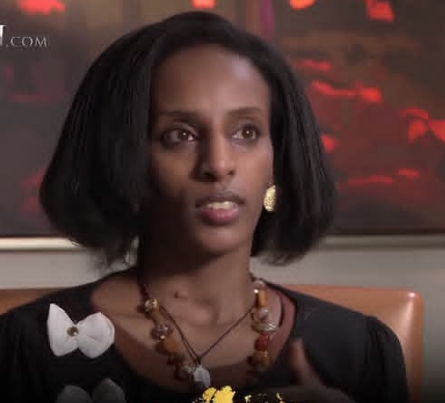
‘At the time of sentencing, Mariam Ibrahim was eight months pregnant and was already caring for her 20-month-old son, Martin, inside Omdurman Women’s Prison. She would spend the next several months in detention under harsh conditions’.
By Numien Carl
Khartoum, Sudan – A Sudanese medical doctor who spent months in prison chained to a floor while pregnant has been released after an appeals court overturned her death sentence for apostasy, ending a case that drew condemnation from governments and human rights groups around the world.
Mariam Yahia Ibrahim, 27, a Christian and practicing physician, was convicted in May 2014 by a Khartoum court of apostasy and adultery. Because Sudan’s legal system considered her Muslim due to her absent father, the court ruled she could not legally identify as Christian or marry a Christian man.
The penalty was severe. Judges sentenced Ibrahim to 100 lashes for adultery and death by hanging for apostasy. The court gave her three days to renounce her Christian faith. She refused.
At the time of sentencing, Mariam Ibrahim was eight months pregnant and was already caring for her 20-month-old son, Martin, inside Omdurman Women’s Prison. She would spend the next several months in detention under harsh conditions. According to accounts from her family and legal team, she was kept shackled to the prison floor with her young son beside her.
While still in custody, Ibrahim gave birth to her daughter, Maya, inside the prison. Her execution was delayed because of the pregnancy and nursing period, but she remained imprisoned as international pressure mounted.
The case quickly became a flashpoint for debate over religious freedom in Sudan, a Muslim-majority country that at the time applied a version of Sharia law. Foreign ministries, the United Nations, the African Union, and rights organizations called for her immediate release, arguing the conviction violated fundamental freedoms of belief and conscience.
Amid the global outcry, Sudan’s Court of Appeal reviewed the case in June 2014 and ordered Ibrahim’s conviction overturned. She was released from prison and later left Sudan with her husband, Daniel Wani, a South Sudanese-American, and their two children.
Looking back on her ordeal, Ibrahim said her faith carried her through.
“Being in prison strengthened my faith even more,” she told CBN News, giving glory to God for sustaining her through the trial.
She described the months of detention not as a breaking point, but as a period that deepened her conviction. Even while pregnant and caring for a toddler in prison, she said she was not afraid.
Human rights advocates pointed to Ibrahim’s case as an example of how apostasy laws can be used against religious minorities. Others in Sudan noted the tension between the country’s legal code and its international obligations on freedom of religion.
Since her release, Ibrahim and her family have resettled abroad. She has continued to speak publicly about religious persecution, urging that people be allowed to practice their faith without fear of prosecution.
Her story remains one of the most widely reported cases of apostasy in Sudan’s recent history. For many, it highlighted both the risks faced by those who convert or marry outside the state-recognized religion, and the impact that international attention can have when judicial decisions come into conflict with basic human rights.
The appeals court did not detail the legal reasoning for overturning the conviction, but its decision brought an end to a trial that had placed Sudan under intense scrutiny for nearly two months.