

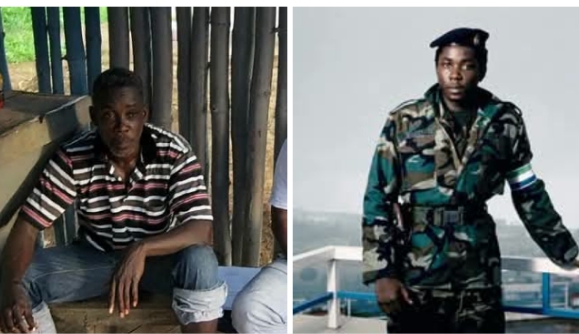
The World’s Youngest President Who Now Lives in Poverty
On April 29, 1992, a 25-year-old army captain named Valentine Strasser walked into Sierra Leone’s State House and became the youngest head of state in the world.
He had not planned a revolution. He had simply marched from the war front to protest unpaid salaries and a government that had abandoned its soldiers to die in the bush.
By the time he reached Freetown, President Momoh had fled to Guinea, and Strasser found himself in charge of a country collapsing into chaos.
Strasser grew up in Allen Town, a poor neighborhood in Freetown’s east end, raised by a single mother. He never knew his biological father.
He was a gifted student in math and chemistry at the Sierra Leone Grammar School, and when he graduated at 18, he joined the army. By 22, he was a young officer stationed in Kailahun District, fighting the Revolutionary United Front rebels who had invaded from Liberia.
The war was brutal. Strasser and his fellow soldiers went months without pay. They lacked boots, ammunition, and food. When Strasser was wounded by shrapnel, he could not get evacuated.
The government simply did not care. So he and five other young soldiers decided to march to Freetown to complain. They never expected to seize power. But when they arrived, the president was gone, and the State House was theirs for the taking.
Strasser became an international celebrity overnight. He wore Ray-Ban sunglasses and designer blazers. He met Bill Clinton, John Major, and Nelson Mandela.
He hired South African mercenaries from Executive Outcomes to fight the rebels, and they pushed the RUF back from the capital . But the honeymoon did not last.
Eight months into his rule, Strasser’s government executed 29 men accused of plotting a coup. The bodies were dumped on a beach outside Freetown.
Amnesty International condemned the executions. Britain suspended aid. The young leader who had promised to end corruption and fight the rebels was now accused of the same brutality he had condemned.
By 1996, the international community was demanding democratic elections. Strasser, like many military rulers before him, put himself forward as a presidential candidate.
But his own deputy, Julius Maada Bio, had other plans. On January 16, 1996, Bio overthrew Strasser in a palace coup and sent him into exile in Guinea.
Strasser was given a UN scholarship to study law at the University of Warwick in England. He lasted 18 months. The sight of a former dictator in a classroom provoked protests, and his asylum application was rejected.
He drifted. He tried to enter Gambia in 2000 but was arrested on suspicion of plotting a coup and deported.
Strasser eventually returned to Sierra Leone, a broken man. By 2016, reports described him living in poverty in his mother’s old house in Grafton, mocked by children who could not believe the continent’s youngest ruler now wore rags.
He had descended into alcoholism, jumping from couch to couch in London before being sent back to the country he once ruled . In 2019, he fell gravely ill and had part of his leg amputated.
President Bio, the same man who had overthrown him in 1996, gave him an apartment upon his return from treatment.
Strasser’s story is one of the most tragic falls in African political history. From the world’s youngest head of state to a forgotten pauper, all in the span of 30 years.
He is still alive, living quietly in Sierra Leone, rarely seen in public. The boy soldier who once defied the world is now a ghost in his own country.