
By Sanni Abdullahi
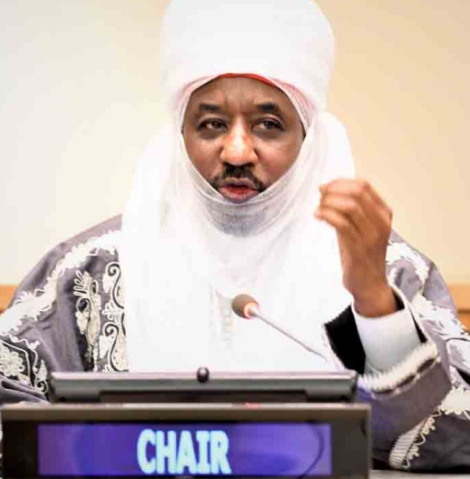
Former Governor of the Central Bank of Nigeria and Emir of Kano, HRM Muhammadu Sanusi II, has criticized the communication style of President Bola Tinubu’s administration, saying the government does not express itself properly and perceives every dissenting suggestion as an attack.
Sanusi, who spoke on Tuesday at the Oxford Global Think Tank conference convened by former Director-General of the Securities and Exchange Commission, Ms Arunma Oteh, however commended the administration for its economic reforms, noting that the government deserves credit for pulling the country back from the brink.
“This government doesn’t express itself properly. It sees every suggestion and contribution it does not like as an attack, and it doesn’t have good spokespersons,” Sanusi said.
Despite the criticism, the former CBN governor said it was important to acknowledge the progress recorded under the current reforms, pointing to improvements in key macroeconomic indicators.
“Let’s look at the good side of the reforms. GDP in Q2 2026 was at 4.48%. It’s not as high as it was under the Yar’Adua/Jonathan government, but during the Buhari years, the economy grew by 0.9%. Today it’s at 4.5%. That’s progress,” he said.
Sanusi noted that inflation has moderated significantly, dropping from around 30 percent to 14.6 percent, with projections that it could fall further to 12.5 percent by the end of 2026.
“Inflation is down from 30% to 14.6% and is projected to be 12.5% by the end of the year. That is progress,” the Monarch stressed.
The Emir also highlighted improvement in per capita income and external reserves. According to him, GDP per capita in dollar terms has increased by 47 percent since 2023, and if the current momentum is sustained, it could return to 2005 levels by the end of next year.
“GDP per capita in dollar terms has gone up since 2023 by 47%. If we continue at this rate, by the end of next year, GDP per capita will be back to where it was in 2005,” Sanusi maintained.
He disclosed that Nigeria’s foreign reserves now stand at $55 billion, though he cautioned that a significant portion is driven by portfolio flows which are inherently volatile. He attributed the continued inflow to high oil prices occasioned by the ongoing war in the Strait of Hormuz and attractive returns in the Nigerian market.
“Our reserves are at $55 billion, and yes, a lot of it is driven by portfolio flows, which are volatile, but we are lucky that there is a war in the Strait of Hormuz. Oil prices are high. Investors would like to stay in Nigeria because of that and the high returns, and therefore we get the portfolio flows,” he explained.
Sanusi further pointed to emerging signs of economic diversification, citing the impact of the Dangote Refinery on the country’s export profile.
“We are also making progress in terms of diversification. 20% of our exports are coming from the Dangote Refinery. There are clearly foundations being laid for stability. It’s not the end, but the first step towards stability,” the former CBN boss noted.
While affirming that he is not a fan of politicians, Sanusi insisted that credit should be given to the Tinubu administration for stabilising the economy.
“I’m not a fan of politicians, but we need to give credit to President Tinubu’s administration for bringing us back from the brink,” the Emir concluded.
Sanusi’s remarks come amid ongoing debate over the impact of the administration’s reforms, including fuel subsidy removal, exchange rate unification, and revenue mobilisation efforts, which have drawn both commendation and criticism from stakeholders.