
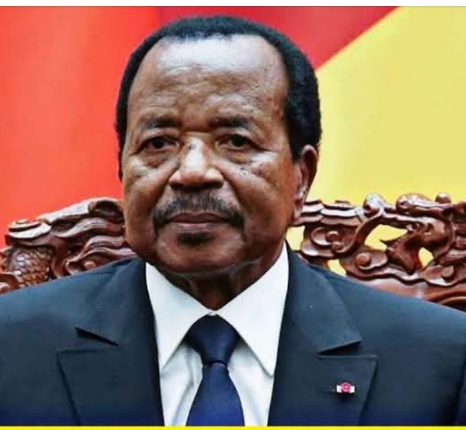
…demands explanation, legislative framework
By Ekinson George
Yaoundé, Cameroon – President Paul Biya’s prolonged absence from Cameroon has triggered fresh calls for transparency, with the country’s main opposition party demanding clear constitutional guidelines on how long a sitting president can govern from abroad.
The 93-year-old leader left Cameroon on June 7, 2026, for what the Presidency described as a “private stay in Europe.” As of Tuesday, July 21, that stay has stretched to 44 days.
Biya is currently in Geneva, Switzerland, and has not made any public appearance since presiding over the May 20 National Day celebrations in Yaoundé.
In a brief statement released last week, the Presidency insisted that President Biya “continues to manage state affairs from Geneva, assisted by his team.” Government spokespersons have also dismissed speculation circulating on social media that the president is receiving special medical treatment, describing such reports as “unfounded.”
The extended absence, however, has not sat well with opposition voices.
On July 18, the Union Démocratique du Cameroun, UDC, issued a strongly worded statement calling on the government to account for the president’s whereabouts and to clarify procedures for prolonged presidential absences.
“We cannot run a republic on silence and assumptions,” the UDC said. “Cameroonians deserve regular updates on the health and activities of the Head of State, and Parliament deserves to be formally briefed.”
The party tabled three key demands. First, it wants clearer rules in the constitution on how prolonged presidential absences should be handled, including timelines and thresholds for temporary transfer of power. Second, it is asking for regular public and parliamentary updates on the president’s status while out of the country. Third, the UDC is urging the government to consider filling the position of Vice President, a role that was reinstated earlier in 2026 but remains vacant.
Biya has led Cameroon since November 1982, making him one of Africa’s longest-serving leaders. At 93, questions about succession and continuity have become a recurring theme in national politics, particularly in the lead-up to the presidential election expected later this year.
Some Cameronian political analysts hold that while there is no legal requirement for the president to reside in Cameroon at all times, extended absences without formal communication tend to fuel uncertainty in a country where information from the presidency is tightly controlled.
Stakeholders have echoed the UDC’s call, arguing that transparency is critical to maintaining public confidence.
“In a democracy, the people have a right to know who is steering the ship, especially when the captain is away for more than a month,” said one Yaoundé-based governance advocate.
As at Press time, government officials maintain that all presidential duties are being carried out and that there is no cause for alarm. But with no date announced for Biya’s return and no televised address since May, the pressure is mounting.
The UDC says it will raise the matter in the next parliamentary session and will continue to push for reforms that prevent what it calls “governance by ambiguity.”