

A crucial, high-level meeting is underway for all stakeholders in the construction subsector.
This stakeholders meeting will bring together policymakers, professional bodies, industry leaders, educational institutions, and project partners to discuss strategies for enhancing the nationwide implementation of Digital Technologies in the technical vocational education and training of construction education in Nigeria.
The critical meeting is scheduled to hold between the second or third week of December, 2025 and is expected to result in a cohesive national strategy, ensuring that the successes generated by the DT4TVET project translates into sustainable, long-term change.
The Edinburgh Napier University and University of Uyo collaboration with the support of the British Council have laid a robust foundation for a digitally-empowered generation of construction professionals, ready to build the nation’s future.
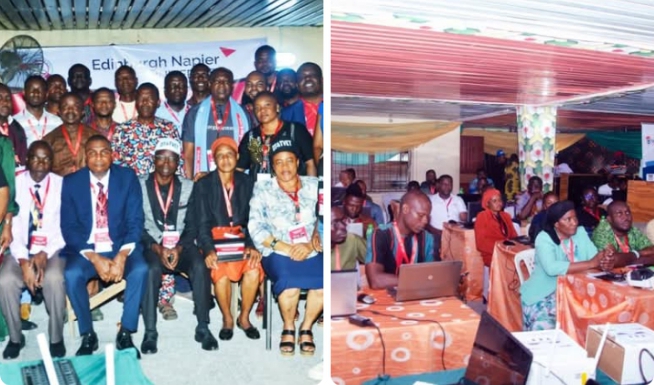
These are fallouts from a successful conclusion of a landmark three-day workshop on Digital Technologies for TVET (DT4TVET) held in Uyo from October 15th to 17th, 2025.
The High levelled meeting marked a crucial milestone for a year-long collaborative project between Edinburgh Napier University and the University of Uyo, generously sponsored by the British Council.
The workshop was aimed at equipping educators and trainers with essential skills in cutting-edge digital technologies, thereby impacting directly the quality and relevance of construction education across Nigeria.
The initiative, spearheaded by the Principal Investigator, Dr. Dubem Isaac Ikediashi, brought together over 40 participants from various technical schools, monotechnics/polytechnics, and skill acquisition centers spanning the breadth of Nigeria. This diverse participation underscored the national significance and widespread interest in digitizing construction education.
Crucially, the success of this workshop was built upon prior investment in the Nigerian team. Three key project members had previously been sponsored to Edinburgh Napier University (ENU) in the UK for a dedicated Train-the-Trainer program under the auspices of this project. This strategic capacity-building7 ensured that the instructors were highly proficient in the digital technologies being taught, fostering a sustainable model for expertise transfer.
The curriculum focused intensely on the fundamentals of Building Information Modeling (BIM) application and the potentials of Virtual Reality (VR) applications in training. These technologies are globally recognized for revolutionizing design, planning, and execution in the construction industry, promising to make TVET graduates in Nigeria more competitive internationally.
The training was meticulously delivered by a dedicated team of experts. Dr. Chris Belounwu, the Nigerian project consultant and workshop instructor, led the sessions, ensuring participants gained practical, hands-on experience while the UK trained project team members provided the hands-on experience and practical assistance for the participants. The team also included esteemed academics and professionals: Prof Emmanuel Akpabio, Prof Anthony Ujene, Prof Akaninyene Umoh, Dr. Jenny Ntamark, Dr. Chicheta Nissi, and Bldr Joy Solomon. Their combined expertise ensured the workshop objectives were met with depth and precision.
Participants lauded the British Council sponsorship of the event. Not only was the high-quality training fully sponsored, but the project team ensured participants were “adequately supported and taken care of” throughout the duration. Furthermore, the commitment to safety extended beyond the closing ceremony, with participants being “monitored for safe return to their various destination.”
Digital Tools: The Undeniable tool of the Future
The integration of technologies like BIM is essential in modern construction. BIM facilitates a collaborative digital representation of a building’s physical and functional characteristics, leading to reduced errors, improved project timelines, and cost savings. Participants were trained to understand how to incorporate this methodology into their teaching modules, moving beyond traditional methods.
Metaverse and VR applications offered a particularly exciting dimension to the training. These immersive tools allow trainees to practice complex and often high-risk construction tasks in a safe, controlled virtual environment. This dramatically enhances learning retention and practical skill acquisition without the limitations of physical classrooms.
For further inquiries on the DT4TVET project, please contact the University of Uyo’s Department of Building.