
As residents question NDDC contract status, call for full public disclosure
By Ime Silas
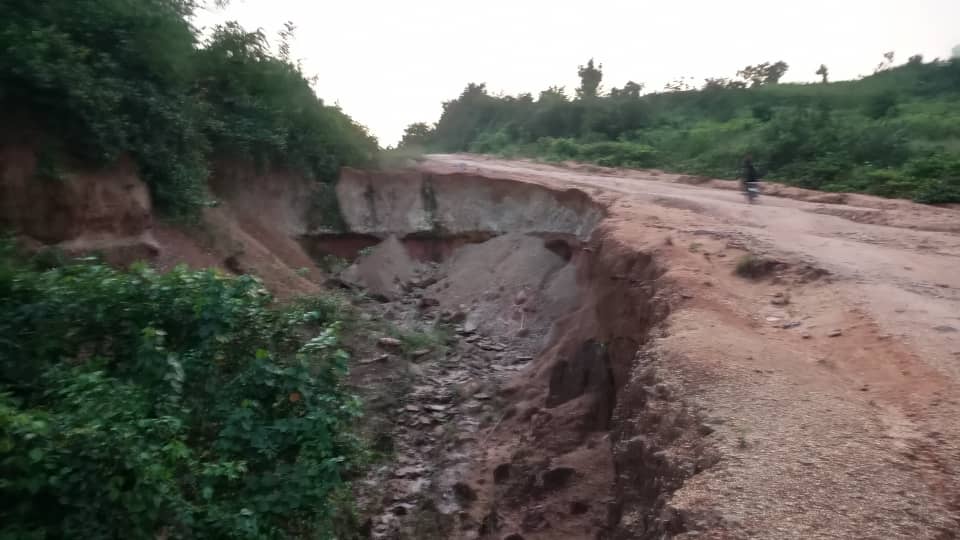
For decades, residents of Ikot Ayann have navigated a road that community members describe as a daily burden rather than a public asset. Now, a renewed call for accountability is putting the project back in the public eye, with demands for clarity from the Niger Delta Development Commission, NDDC, and other officials linked to the contract.
In a signed statement circulated this week, Mfon Umana, a United States-based indigene of Ikot Ayann, urged authorities to explain why Ikot Ayann Road remains in a deplorable state despite years of public discussion about intervention and funding.
The statement, framed as a request for transparency, poses a series of questions about the award, execution, and reported completion of the project.
“We Deserve to Know”
“We deserve to know why a road that should have improved the lives of our people has remained in this state,” Umana wrote.
She noted that for “far too many years” residents have endured the condition of the road, which she said has failed to deliver the benefits expected from a government-backed intervention.
The statement references long-standing community discussions about the project’s origin.
According to Mfon Umana, she has “heard claims that this road was awarded as a Niger Delta Development Commission (NDDC) contract and that Senator Ita Enang was involved in handling the project while serving as a presidential aide.” She stressed, however, that she cannot independently confirm those claims.
“I believe they should be clarified by the appropriate authorities and anyone directly involved,” she said, shifting the responsibility for verification to the NDDC, Senator Enang, and other public officials with knowledge of the matter.
Questions Over ‘Completed’ Status
A central part of the community’s concern centers on reports that the NDDC may have recorded the contract as completed. If accurate, Umana argued, that raises further questions about oversight and quality assurance.
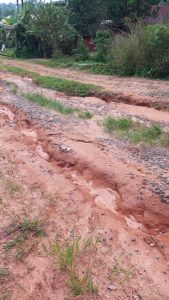
She listed five specific areas she wants addressed: Who reported that the project had been completed? Who certified that the work met the required standard? Who inspected the road before it was signed off? What was the original scope and monetary value of the contract? And were funds fully disbursed, and on what basis was payment authorized?
“If Senator Ita Enang had any role in this project, I respectfully ask him to help the public understand what happened and why Ikot Ayann Road remains in its present condition,” the statement read.
Call for Records and Certification Details
The statement also directly addresses the NDDC, calling on the Commission to “publicly release all records relating to this project.” The records requested include the contract award letter, bill of quantities, scope of work, details of payments made, current project status, inspection reports, completion certificates if issued, and the names of officers who certified and approved the project.
“If the project was indeed reported as completed, the public deserves to know who made that certification and on what basis,” she added.
Umana said the invitation to respond is open to the NDDC, Senator Enang, and “every public official with knowledge of this project.” She noted that if circulating information is incorrect, “this is an opportunity to set the record straight.” Conversely, if the project was officially declared complete, she said the public has a right to know “who certified it, who inspected it, and why Ikot Ayann Road remains in its current condition.”
Accountability Over Politics
Throughout the statement, Umana emphasized that the demand is not rooted in partisan politics or personal grievance.
“This is not about politics or personal attacks. It is about accountability, transparency, and ensuring that public resources are used for the benefit of the people,” she wrote. “Transparency is not an attack on anyone’s reputation—it is a duty owed to the people. Accountability builds public trust, and our community deserves nothing less.”
Her position reflects a broader sentiment in many Niger Delta communities where residents frequently question the gap between budgetary allocations for infrastructure and the condition of projects on the ground. Roads, in particular, are often cited as critical to market access, healthcare delivery, school attendance, and emergency response.
Community Impact
While the statement did not provide a technical assessment of the road, its tone underscored the human impact of delayed infrastructure. Poor road conditions in rural and semi-urban areas are routinely linked to higher transport costs, vehicle damage, restricted movement during rains, and reduced economic activity.
“The people of Ikot Ayann deserve the truth. More importantly, they deserve the road that was promised,” Umana concluded.
What Happens Next
As of press time, there was no immediate public response from the NDDC or from Senator Ita Enang regarding the specific questions raised. The Commission has in the past published lists of projects and audit reports in response to public pressure, though community groups often say more granular, project-level documentation is needed.
Governance advocates say the request aligns with Nigeria’s Freedom of Information Act, which provides for public access to records held by public institutions, subject to exemptions. They argue that proactive disclosure of contract details, inspection reports, and certification documents can reduce speculation and rebuild confidence in public procurement.
For Ikot Ayann residents, the immediate expectation is simple: clarity on what was contracted, what was paid, what was delivered, and who signed off on it.
Whether that clarity comes will determine if the road remains a symbol of unanswered questions, or becomes a case study in how transparency can restore public trust.