
…Nigerians kick, demand disclosure, prosecution of sponsors, perpetrators of Benue, Delta, Lagos states attacks on NDC
By Sanni Abdullahi
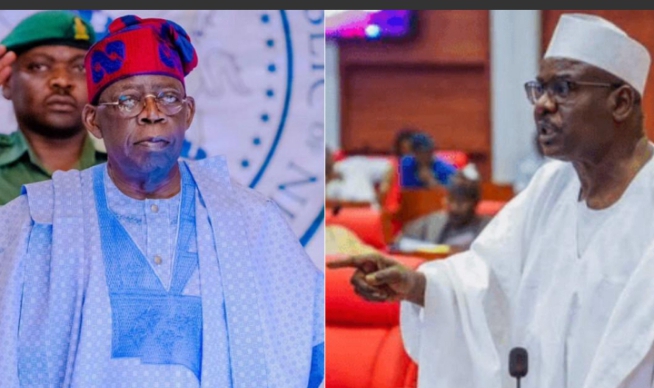
Senator Ali Ndume has expressed deep concern over the recent incident involving President Bola Tinubu at a mosque, warning that the attack is a dangerous sign of growing political tension ahead of the 2027 general elections.
The Borno South Senator said what happened to the President should not be treated as a minor incident or dismissed as an embarrassment to one man, but as an embarrassment to all Nigerians and a threat to the country’s democracy.
“What happened to Mr President last week is not an embarrassment to him but an embarrassment to Nigerians. President Tinubu is a true democrat. If it were a military regime, the 78 people arrested would have been dead by now,” Ndume said.
“What just happened is the beginning of what could happen before 2027 if we don’t put an end to it completely. Imagine what happened to him; what will now happen to us?”
Ndume specifically expressed the fear that if the President could be attacked in spite of the huge security agents around him, what would happen to Senators and other politicians who do not enjoy that level of protection.
His comments have added to the growing public outrage trailing a series of reported attacks on political figures and institutions across the country.
In recent days, Nigerians have kicked against what they describe as a rising culture of political intolerance, and are demanding full disclosure and prosecution of the sponsors of attacks on the Nigeria Democratic Congress, NDC, and its presidential candidate, Mr. Peter Obi in Jos, and other parts of the country during campaign outings.
The attacks, which have dominated discussions on social media and in political circles, have raised fresh fears that the build-up to 2027 could turn violent if the authorities fail to act decisively.
Many Nigerians argue that the repeated attacks cannot be dismissed as random acts by miscreants, insisting that they bear the hallmarks of organized and sponsored violence aimed at silencing opposition voices and intimidating political opponents.
They are now calling on the Federal Government, the Nigeria Police Force, the Department of State Services and other security agencies to make public the identities of those arrested in connection with the various incidents, and to ensure that both the attackers and their sponsors are prosecuted in accordance with the law.
According to the critics, failure to prosecute will only embolden more attacks and send the wrong signal that political violence is tolerated in Nigeria’s democracy.
Ndume’s intervention is significant because he is a ranking member of the ruling All Progressives Congress, APC, and a close observer of the nation’s security architecture.
By speaking out, he has lent weight to the argument that the attacks are not just an opposition problem, but a national problem that could affect politicians across party lines.
Sen Ndume’s warning that “if it can happen to the President, it can happen to anyone” captures the mood of many lawmakers who now fear for their own safety when they go out to meet constituents, attend religious gatherings or campaign in volatile areas.
Pundits note that the incident involving President Tinubu, who is usually surrounded by one of the most elaborate security cordons in the country, has shattered the assumption that high-profile politicians are immune from physical attacks.
In his reaction, Ndume praised President Tinubu for his democratic temperament, saying the President’s handling of the incident showed restraint and respect for the rule of law.
He contrasted the democratic response with what would have happened under a military regime, where those arrested would have faced harsh and extra-judicial punishment.
That restraint, he argued, should not be mistaken for weakness, and should not encourage others to attempt similar attacks on political leaders.
Ndume called on security agencies to go beyond arresting foot soldiers and to unravel the networks behind the attacks, including those who fund, mobilize and protect the attackers.
Meanwhile, Nigerians on social media have continued to demand answers, with many asking why attacks on opposition figures in Jos, Delta, Lagos, etc, have not attracted the same swift security response as the incident involving the President.
Others have called for an independent investigation, arguing that public confidence in the electoral process will be undermined if politicians and their supporters feel unsafe to move freely across the country.
Civil society groups have also weighed in, warning that the right to freedom of movement, freedom of association and freedom of expression are guaranteed by the Constitution, and that any attempt to stifle them through violence is an attack on democracy itself.
As the 2027 elections draw closer, the calls are growing louder for the government to act now, before the situation escalates beyond control.