
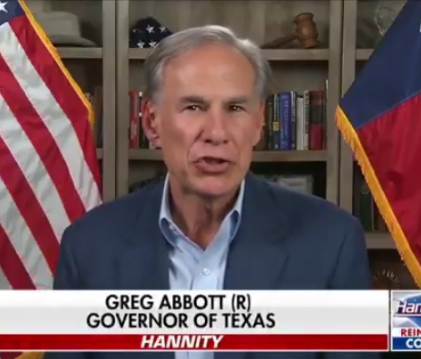
“To be clear, Sharia law is not allowed in Texas. Nor are Sharia cities,” and “I signed laws that BAN Sharia Law and Sharia Compounds in Texas. No business & no individual should fear… If this person, or ANYONE, attempts to impose Sharia compliance, report it to local law enforcement or the Texas Dept. of Public Safety.” – Gov Abbott
By Our Special Correspondent
Debate over the application and limits of Shari’a law has intensified on two continents, with Texas Governor Greg Abbott banning Sharia law in Texas, while Saudi Arabia faces global backlash over the execution of two Bangladeshi nationals for an alleged immoral act inside a mosque in Mecca.
In Texas, Governor Abbott has in recent weeks intensified rhetoric against what he describes as attempts to establish Sharia courts and Sharia-compliant enclaves in the state.
Speaking at the Republican National Midterm Convention in Dallas on September 10, 2026, Abbott told delegates: “We are not waiting on Washington, D.C. We will fully ban Sharia law in Texas.”
The statement built on earlier posts on X, where Abbott wrote: “To be clear, Sharia law is not allowed in Texas. Nor are Sharia cities,” and “I signed laws that BAN Sharia Law and Sharia Compounds in Texas. No business & no individual should fear… If this person, or ANYONE, attempts to impose Sharia compliance, report it to local law enforcement or the Texas Dept. of Public Safety.”
Abbott’s administration has directed state agencies to investigate entities in North Texas, including a Dallas-based Islamic Tribunal, over allegations it was presenting religious mediation decisions as final judgments approved by Texas courts. Attorney General Ken Paxton opened an investigation into the tribunal, which says it provides voluntary religious guidance and that its decisions are not legally binding.
The governor has also ordered scrutiny of a 400-acre development by the East Plano Islamic Center, originally branded EPIC City and later renamed The Meadow, which proposes homes, a mosque, school and commercial facilities. Abbott described it as a potential “Sharia zone.”
Legally, Texas does not have a new standalone “Sharia ban” statute signed in 2026. The state’s existing framework is the 2017 American Laws for American Courts law, which prohibits Texas courts from applying any foreign or religious law, including Sharia, if it conflicts with the U.S. Constitution or Texas law.
Several anti-Sharia bills have been introduced by members of the Sharia-Free America Caucus led by Representatives Keith Self and Chip Roy.
Thousands of Texans, non-muslims and residents of Texas have praised Governor Abbott for according to them, taking the bold step to sanitize the state. Some in their reactions on the social media said no state with sane leaders should allow two different laws.
One of them, Mr. Craig Stalin posted “Any religion-backed law or practice that does not respect human life must be wiped out. May God bless Gov Abbott”.
But, in a swift reaction to, the Council on American-Islamic Relations, CAIR, have criticized Abbott’s statements as misleading, noting that Sharia governs personal religious practice for Muslims and does not replace civil law.
Meanwhile, in Saudi Arabia, the Ministry of Interior announced on October 14 that it executed two Bangladeshi nationals, Nazrul Islam Abdul Basir and Siti Akhtar, in the Makkah region after a court convicted them of an immoral act inside a mosque, violating its sanctity.
The ministry said the court imposed death under ta’zir, a discretionary punishment, and that the sentence was upheld before a royal order was issued. The ministry did not name the mosque, disclose when the arrest occurred, or detail the exact nature of the act.
The execution has drawn outrage after unverified reports from Bangladesh claimed the pair were newlyweds on honeymoon performing Umrah and that the “immoral act” was a forehead kiss. That version has not been confirmed by Saudi authorities.
Bangladesh’s Consulate in Jeddah said it was not notified in advance and has formally sought an explanation from Riyadh.
The two developments have fueled a wider conversation online about religious law, its enforcement, and its limits in both Western democracies and Islamic kingdoms.