
…as immigration crackdown continues to spark outrage
By Greg Macaulay
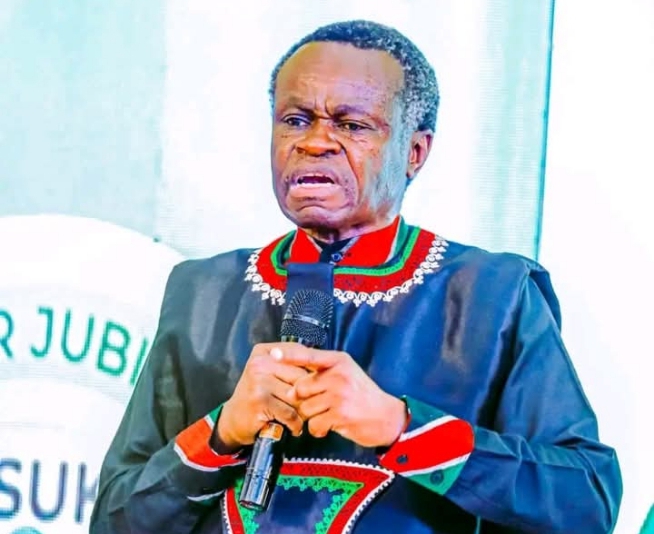
NAIROBI – Renowned Kenyan lawyer and pan-Africanist Prof. PLO Lumumba has called on African governments to take immediate diplomatic action against South Africa, accusing Pretoria of “humiliating and dehumanizing” fellow Africans under the guise of an immigration crackdown.
In a strongly worded statement that has since gone viral across the continent, Prof. Lumumba said the ongoing operations targeting “undocumented immigrants” in South Africa amount to a direct assault on African unity and dignity. He argued that the silence of other African states in the face of repeated incidents has emboldened the campaign.
“South Africa continues to humiliate and dehumanize fellow Africans in the name of eliminating ‘undocumented immigrants,’ yet African governments are silent,” Lumumba said. “This is the time for all African Governments to recall their Ambassadors from South Africa for consultation and to ask South African Ambassadors to go back to Pretoria for guidance.”
A Call for Diplomatic Sanctions
Prof. Lumumba’s proposal is both rare and severe: a coordinated recall of ambassadors. In diplomatic practice, such a move signals deep displeasure and is often a precursor to broader sanctions or a breakdown in relations.
According to the professor, the measure is necessary because South Africa “is a danger to African unity and must be called out by all Africans of goodwill.” He framed the issue not merely as a law enforcement matter, but as a moral and continental one.
“African solidarity cannot be a slogan we recite at AU summits while our people are being hunted in the streets of Johannesburg, Durban and Cape Town,” he added in follow-up remarks shared by supporters. “If we cannot defend each other, then what is the meaning of ‘One Africa, One People’?”
Background: Tensions Over Immigration Enforcement
South Africa has in recent years intensified raids and verification drives aimed at curbing irregular migration. Government officials maintain that the operations are targeted at criminal networks and individuals without legal status, and are not directed at any particular nationality.
However, human rights groups and migrant communities have repeatedly alleged profiling, arbitrary arrests, and violence during such operations. Nationals from Nigeria, Zimbabwe, Malawi, Mozambique, and other SADC countries have reported being stopped, detained, or attacked amid xenophobic sentiment that flares periodically in townships and urban centers.
Those incidents have in the past led to retaliatory attacks on South African businesses in other African countries, and to diplomatic protests from Abuja, Harare, and Lusaka. Yet a continent-wide coordinated response has not materialized.
“Silence is Complicity,” Says Lumumba
The crux of Prof. Lumumba’s criticism is the perceived inaction of African capitals. He contends that quiet démarches and press statements have not changed conditions on the ground.
“Diplomacy without consequence is decoration,” he argued. “If fellow Africans are treated as less than human, then the rest of Africa must ask: are we a union in name only?”
By urging governments to summon South African envoys home “for guidance,” Lumumba is essentially calling on Pretoria to explain its policy to the rest of the continent and to account for the treatment of African migrants.
Reactions and What Happens Next
The statement has drawn strong support on social media, particularly among youth and diaspora groups who say African governments often fail to protect citizens abroad. Others caution that recalling ambassadors could hurt trade, education exchanges, and the free movement protocols the African Union is trying to advance under AfCFTA.
South Africa’s Department of International Relations and Cooperation has not yet responded to Lumumba’s remarks at the time of publication. The African Union Commission also declined to comment, saying it was “monitoring developments.”
For Prof. Lumumba, however, the moment demands more than monitoring. “Africans of goodwill,” he said, must speak with one voice. Whether governments will heed that call and risk a diplomatic rupture with one of the continent’s largest economies remains to be seen.
But with the professor’s words trending from Lagos to Nairobi, the pressure on African leaders to move beyond statements and act has never been clearer.