

Pretoria – Outrage is spreading across Nigeria and in the diaspora after South Africa’s government said it will not pay compensation to Nigerians who abandoned homes, shops and other assets during the recent wave of anti-migrant protests.
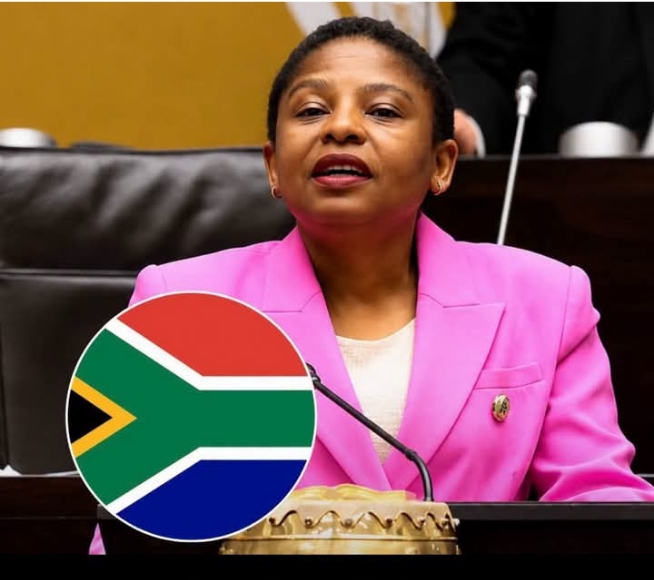
Minister in the Presidency, Khumbudzo Ntshavheni, confirmed the government’s position on Tuesday, drawing sharp criticism from Nigerian officials, civil society groups, and affected families who say they lost livelihoods built over decades.
Speaking to reporters in Pretoria, Ntshavheni said South Africa does not owe payouts to foreign nationals who fled the unrest. “The government will not provide compensation,” she stated. “Owners of legally registered properties or businesses can still manage or sell their assets through the country’s legal system.”
Her remarks came days after Nigerian authorities said they had begun documenting the extent of losses suffered by citizens who left South Africa in haste. According to the Ministry of Foreign Affairs in Abuja, officials are compiling evidence of torched shops, vandalized homes, and abandoned inventory, with plans to pursue compensation through diplomatic channels.
The minister’s refusal has now injected fresh tension into Nigeria-South Africa relations, two countries that have long been Africa’s largest economies and frequent partners on trade, culture, and regional security.
“We left with only our clothes”
For many Nigerians who returned home in recent weeks, the damage is personal and immediate. Community leaders in Johannesburg and Durban estimate that hundreds of small businesses — from spare parts outlets to salons, grocery stores, and phone repair kiosks — were targeted, looted, or destroyed during the protests.
“We left with only our clothes,” said Chinedu Okoro, a trader who ran an electronics shop in Pretoria for 12 years before fleeing to Port Harcourt last month. “My shop was broken into. Everything inside was gone. Now they are saying there is no compensation. How do we start again?”
Similar accounts have been shared widely on social media, following the minister’s outbursts. Hashtags calling for accountability have trended in Nigeria since Ntshavheni’s statement was published.
Diplomatic fallout looms
Nigeria’s government has not yet announced formal action, but officials signaled that the matter will be raised at the highest levels. A spokesperson for the Ministry of Foreign Affairs said Abuja was “documenting verifiable losses” and would “engage South Africa through appropriate diplomatic mechanisms.”
Analysts say the dispute risks reopening old wounds. Periodic xenophobic violence in South Africa targeting African migrants, including Nigerians, has strained ties between the two countries for years.
In 2019, reprisal attacks on South African businesses in Nigeria followed similar unrest, and both governments were forced into urgent damage-control talks.
“The timing is sensitive,” said Dr. Ifeoma Eze, a lecturer in international relations at the University of Port Harcourt. “Nigeria is already under economic pressure at home. For citizens abroad to feel abandoned adds to public anger and could affect bilateral cooperation on trade and security.”
South Africa’s legal position
Ntshavheni’s defense rests on legal process. She argued that foreign nationals who hold valid title deeds, business registrations, or leases retain rights under South African law and can appoint representatives or sell assets without government intervention.
“We cannot create a special compensation fund every time there is public disorder,” she said. “The law provides avenues for property owners to protect their interests.”
That explanation has done little to calm critics, who argue that many victims could not safely return to retrieve documents, access banks, or hire lawyers while violence was ongoing. Human rights organizations have called for an independent assessment of losses and a joint Nigeria-South Africa task team.
As discussions between the two governments continue, pressure is mounting on both sides to prevent the row from escalating. For now, the minister’s blunt stance has ensured that the issue will not fade quietly — and that Nigerians who fled South Africa are demanding to be heard.