
Iman is one of the clans in Central Ibibio land. Iman currently consists of four lineages, namely: Afaha, Nnung Oku Itina, Asuna and Nnung Oku Ubo. Iman people primarily domicile in their homeland in present-day Etinan and Onna Local Government Areas. Iman has recorded extensive diaspora in many parts of Akwa Ibom State.
Ekom Iman, one of the villages in Nnung Oku Itina, located in the Northern part of Iman clan, is accepted as the ancestral home of Iman people. The village derives its name from a tree. According to tradition, when the ancestors of Iman arrived from the previous place of abode, they settled under the tree and, as was common in that era, they beganto venerate and offer sacrifices to the tree, evolved common deity known as “Itina” and as well as a common totem “Eyot” (Wild Rabbit).
It was the search for more land for farming and hunting as well as the source of water supply that primarily triggered their expansion further south across the Qua Iboe River. They eventually expanded to the tip of the Atlantic Ocean in Oniong clan, Onna Local Government Area.
Iman has ancestral affinity with Nsit, Ikono and Ediene clans. These clans deities, namely: “Anyang Nsit”; “Etefia Ikono” and “Udoe Ediene” share a lot of features with “Itina Iman” deity”. Tradition posits that in the olden days, these deities used to congregate once in a year on a particular “Ederetaha”, which is “Itina Day”. The traditional meeting usually left physical representation in the form of a smoke which would divert across the clans.
In fact, Iman and Nsit are deeply related ancestrally. According to a colonial source, “no iman except the Oku Itina is allowed to enter the hut in which the ndem is kept, but men of Mbak Nsit village, who Ekom claim imaan (i.e. blood relationship) may enter the hut and collect the mud. When sacrifices are being made to Itina, Udo Umo Obom carries out the ceremonies in connection with them but Mbak people have to be present to carry the sacrifices into the hut itself”.
Ekom Iman as an “Island Settlement”
Geographically, Ekom Iman is not a contiguous territory. Ekom Iman does not share a common boundary with any Iman village. Its geographical spread is mildly interrupted by a settlement known as Ikot Ntan, which is now administered as part of Western Nsit clan in Nsit Ibom Local Government Area. Ekom Iman is surrounded by non-Iman villages, such as Ikot Oku Ikono, Ikot Ekpeyak Ikono, Ikot Asat Nsit Afia Nsit, Mbak Nsit and Ikot Ntan Nsit.
The reason for this abnormal situation is attributed to the settlement of the ancestors of Ikot Ntan who migrated from Ntan Ekere in present-day Ibiono Ibom Local Government Area to the Ekom Iman. Their forebears came as hunters and herbalists in search of some roots and barks of tree which were prevalent in Ekom area, for curative purposes.
With time, the Ntan Ekere people were granted permission to settle by Ekom Iman people. Having settled, they engaged in extensive inter-marriages with the neighbouring Nsit communities such as Ikot Oku Nsit, Ikot Asat, etc.,and also established “imaan” (artificial kinship) with Ikot Ekpeyak Ikono people. Based on the deep social contacts with the Western Nsit villages, Ikot Ntan aligned more with the Nsit villages, accepted settlers from Ikot Oku Nsit and supported them in their conflict with Ekom. During the colonial period, Ikot Ntan people were enrolled as taxpayers in Ikot Oku Nsit. The people also attended Asang Customray Court, at Anyam Nsit. Eventually they became part of Western Nsit, even though they are domiciling in Iman clan.
Ekom Iman has four major families, namely: Nnung Nwanake,. Nnung Efiok, Nnung Itina, and Nnung Obio Atime. These major families consist of many sub-families. These families and sub-families are replicated I’m many Iman and non-Iman villages. For instance, in Nnung Ete and Ikot Abasi Idem in Ibesikpo clan. The claim becomes strengthened by the fact that these two villages share Iman totem of Eyoy (Wild Rabbit).
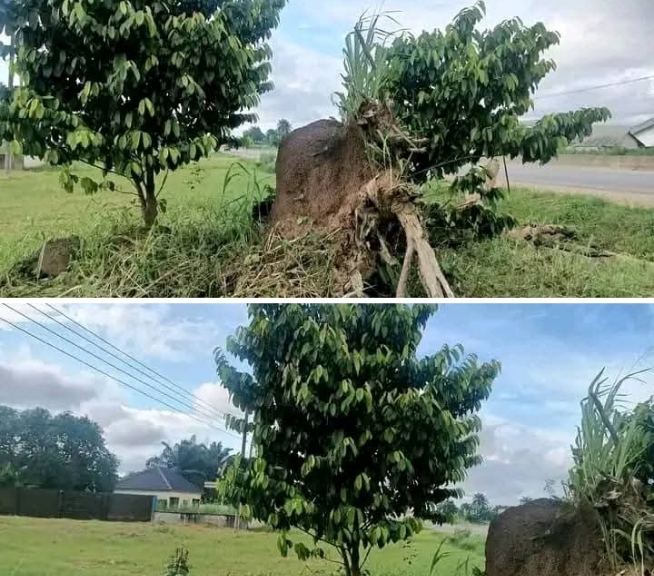
“The Death and Resurrection” of the Ekom Iman Tree
Ekom Iman has very strong ancestral affinity with all the Mbak villages such as Mbak Nsit, Mbak Etoi, Mbak Itam, etc, as well as Ediene Ikot Obio Imo village now part of Oku Clan in Uyo Local Government Area. The relationship is very strong and enduring to the extent that they do not see each other’s blood. It was disclosed during an interview session with Eteidung Linus Udosen of Ekom Iman some years ago that if the dualised Uyo-Etinan road had caused the pulling down of the ancestral Ekom tree which the village derives its name, the compensation for the tree would have been shared among Ekom Iman, Mbak Nsit, Mbak Etoi and Ediene Ikot Obio Imo.
In fact all the mentioned villages would have been given a live cow and other traditional items by their Ekom Iman kinsmen. It was disclosed that when the cost in terms of monetary value of the tree was presented to the government valuers, they advised the contractor to divert the road away from the Ekom tree. Eventually, the tree fell by its self, but some plants have sprouted from the stump. This wonderful experience is what the author terms as “the dead and resurrection of Ekom Iman tree”.
Written By: Uwem Akpan , PhD.