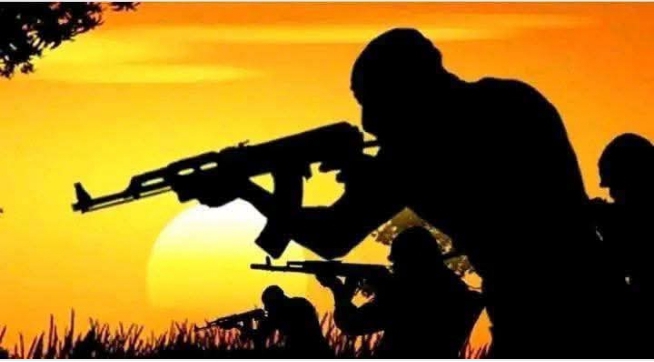

“Meanwhile, the bandits, armed with sophisticated firearms, are allowed to retain their weapons, roam freely across the local government area, and continue killing, kidnapping, raping, and terrorising the same people they supposedly signed peace deals with. If this is peace, then one wonders what war looks like”
This morning, while listening to the BBC Hausa Service on the radio, I heard two news reports that left me deeply troubled and disturbed, not just by their content, but by what they reveal about the grim reality we have come to accept as normal in this part of the country.
The first report was from Irepodun, a community in Kaiama Local Government Area of Kwara State. Bandits had invaded the community, set the palace of the local chief on fire, and unleashed terror on defenceless residents. According to the community’s representative at the State House of Assembly, between 35 and 45 people were killed. Entire lives were wiped out in a single raid, and yet the story passed like yet another grim bulletin in an endless cycle of violence.
The second report came from Katsina State, and if anything, it was even more chilling. In Faskari Local Government Area, both the state and local governments reportedly entered into what they described as “peace deals” with bandits.
As evidence of the bandits’ so-called commitment to peace, 19 corpses were transported to the local government headquarters by the community leaders, so the chairman could see the bodies with his own eyes. In total, about 35 people were said to have been killed.
But one detail in that report stopped me cold. According to the interviewee, part of the peace agreement stipulated that communities must not allow able-bodied men to carry arms. No vigilante groups. No organised self-defence. Even machetes, the most basic tool for rural survival, must be “bad ones,” with no wooden or metal handled, barely usable. A young man found with a proper machete is automatically suspect. In other words, the communities were completely disarmed.
Let us pause and reflect on the absurdity, and cruelty, of this arrangement. Rural communities whose only means of self-defence consist of machetes, cutlasses, bows and arrows are stripped of even these.
Meanwhile, the bandits, armed with sophisticated firearms, are allowed to retain their weapons, roam freely across the local government area, and continue killing, kidnapping, raping, and terrorising the same people they supposedly signed peace deals with. If this is peace, then one wonders what war looks like.
This, sadly, is the unfortunate reality we are living with in Northern Nigeria. And what makes it even more painful is the deafening silence, or selective outrage, of institutions that should, at the very least, pretend to care.
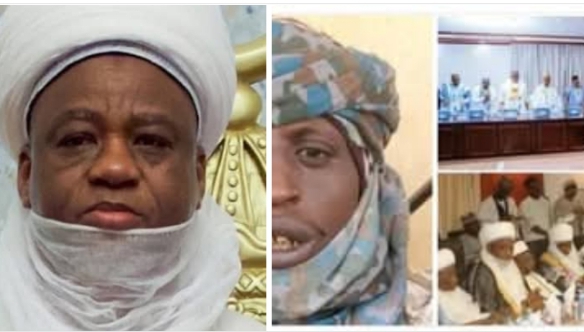
Take the so-called Sharia Council, for example. Faced with rivers of blood, burnt villages, widows, orphans, and mass graves, one would expect emergency meetings, loud condemnations, and firm religious verdicts against banditry. One would expect them to name and shame notorious warlords, to call on figures like Bello Turji, Dogo Gide, and Ado Aleru to fear the wrath of Allah and abandon crimes that have no place under Shari’a. But no.
Instead, we see impressive gatherings, well-attended meetings, and fiery declarations, directed not at killers, but at political targets. The INEC Chairman must go. That, apparently, is the urgent moral crisis of our time.
Look closely at the photographs and video clips from these gatherings. Count the number of people present. Ask yourself a simple question: have these same people ever assembled in such numbers to confront the insecurity ravaging the North? Have they ever publicly, unequivocally condemned Fulani banditry with the same energy they deploy for political matters? The honest answer is no.
This is the tragedy of Northern Nigeria: a place where religion is too often weaponised to pursue political goals, while human life becomes collateral damage. Manipulating religion for power and influence is not new here, it is an old, tired script. What is new, and far more dangerous, is how brazenly it is done while entire communities bleed in silence.
A society that disarms its victims and negotiates with their killers is not seeking peace. It is institutionalising helplessness. And any religious or sociocultural organisation that finds its voice only when politics is at stake, but loses it in the face of mass murder, has forfeited its claim to moral leadership.
©Prof. Aliyu