
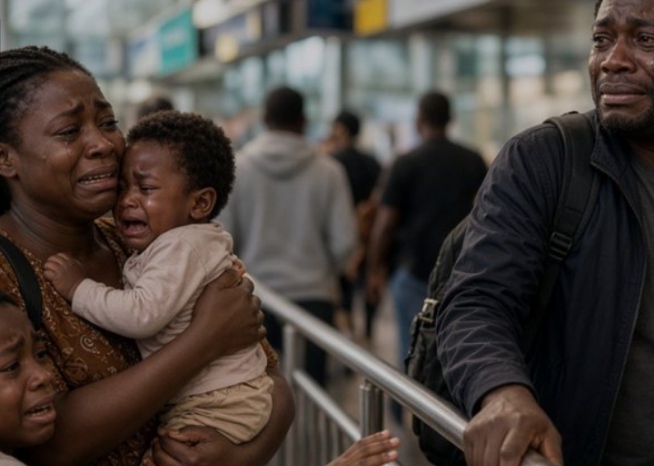
“It is not just about a visa. It is about our family. Our children keep asking when they will see their father again, and I have no answer to give them,”
From our Editorial Desk
ABUJA — For Nigerians affected by President Donald Trump’s partial visa ban, the consequences go far beyond immigration policy. The restrictions have disrupted plans for family reunification, leaving loved ones facing prolonged separation and uncertainty.
For many families, what was supposed to be a journey of reunion has now turned into a painful waiting game, with no clear timeline for when they will see their husbands, wives, children, parents and siblings again.
Across Lagos, Abuja, Port Harcourt, Kano and other major cities, stories of stalled visa applications, cancelled travel plans and shattered hopes are becoming increasingly common. Some families had already sold properties, quit jobs, booked flights and said emotional goodbyes to friends and relatives, only to be told that their visas would not be issued.
Others, who have been living apart for years in anticipation of reunification in the United States, say the ban has forced them to put their lives on hold indefinitely.
A mother in Lagos, who spoke on condition of anonymity, said she has not seen her husband in over three years and had been counting down to the day her children would join him in America. That dream, she said, now hangs in the balance.
“It is not just about a visa. It is about our family. Our children keep asking when they will see their father again, and I have no answer to give them,” she said.
For students, workers and intending immigrants, the ban has also created confusion and anxiety, as many do not know whether they fall under the restricted categories or whether their applications will ever be processed.
While the United States cites security concerns as the reason for the restrictions, many affected Nigerians argue that ordinary families who have followed due process are being unfairly punished for issues beyond their control.
They say the policy fails to distinguish between genuine applicants seeking to reunite with their families and those who may pose security risks.
Questions also remain over what the Nigerian government is doing to address the plight of affected families through diplomatic engagement with the United States.
Critics say the Federal Government has not done enough to engage Washington, push for a review of the restrictions, and secure assurances that law-abiding Nigerians will not continue to suffer.
They argue that Nigeria, as Africa’s most populous country and a key partner of the United States in trade, security and regional stability, should be able to negotiate a fairer arrangement that protects its citizens.
Proponents of diplomatic engagement say Abuja must urgently open high-level talks with the Trump administration, address whatever security concerns have been raised, and ensure that Nigerian families are not left in limbo.
As it stands, however, thousands of families remain caught in the middle of a policy dispute between two governments, paying the emotional price for a decision they had no part in making.
Until a diplomatic solution is found, many say they will continue to live with the pain of separation, clinging to hope that one day, the doors will open again and their families will be reunited.