
By Ime Silas
Ben Murray-Bruce’s short appeal to Chief Innocent Chukwuma is more than a congratulatory note to a fellow businessman. It is a policy argument dressed as friendly advice, and it lands at a moment when Nigeria’s transport and energy economics are being forcibly reset.
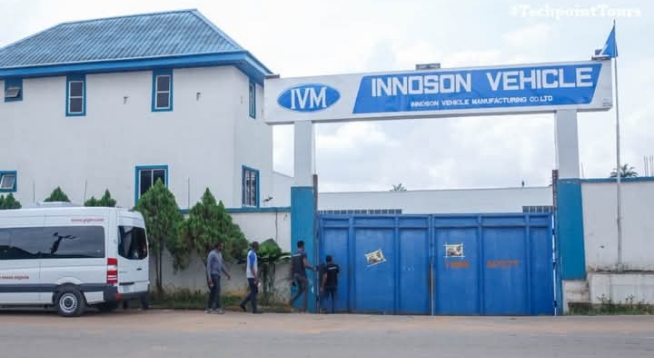
The context: fuel pain and industrial pride Murray-Bruce opens by anchoring the conversation in national pride. He credits Chukwuma for doing “what nobody else dared” by building a car company in Nnewi and putting “Made-in-Nigeria vehicles on our roads.” That framing matters. Innoson Vehicle Manufacturing is still Nigeria’s most visible indigenous automaker, and for many Nigerians it represents proof that local manufacturing can survive in a market long dominated by imports and fairly-used cars.
He then pivots to cost. “Petrol is above ₦1,300 a litre,” he writes. That figure reflects the post-subsidy reality since 2023. With pump prices more than tripling in two years, the monthly cost of running a petrol car has become a household crisis. Murray-Bruce contrasts that with “sunlight is free in Nigeria 365 days a year,” setting up his core thesis: the economics now favor a jump to electric.
The economic case he makes
The letter lays out three linked arguments:
1. Household savings: Electric vehicles have fewer moving parts, so maintenance is cheaper. For families and commercial drivers already squeezed by fuel and spare parts costs, that is a direct pocketbook appeal.
2. National savings: Nigeria spends scarce foreign exchange importing refined fuel. Shifting even a portion of vehicle miles to electricity would ease pressure on dollars and on the balance of payments.
3. Resource leverage: “The lithium is already in our soil in Nasarawa.” By naming a domestic mineral input for batteries, Murray-Bruce is arguing for backward integration, not just assembly. The idea is that Nigeria should not only buy EVs but potentially feed the EV supply chain.
He then uses global momentum as evidence that the shift is not theoretical. “One in every four new cars sold worldwide last year was electric, in China it is more than half, and Ethiopia has stopped importing petrol cars altogether.” The China and global figures track with 2024-2025 industry data. Ethiopia’s 2024 ban on petrol car imports is real and often cited in African policy debates as a bold template. By stacking these examples, Murray-Bruce is telling Innoson: the world has already moved, Nigeria risks being left behind.
Why Innoson specifically
Murray-Bruce notes Innoson has “already started the electric journey with the EX02 and the new Nnewi plant.” The EX02 is Innoson’s small electric car unveiled in recent years, and the company has spoken about expanding EV assembly. His appeal is to accelerate: “make electric your main line, not your side line.”
That is a strategic nudge. As an indigenous brand, Innoson has advantages foreign assemblers don’t: local political goodwill, an existing dealer and service network, and the “Made-in-Nigeria” branding that resonates in a time of import substitution talk. If Innoson scales EVs first, it could define standards, pricing, and after-sales for the Nigerian market before Chinese and European brands dominate.
What the analysis leaves unsaid, and the hurdles
A news analysis has to read between the lines. Murray-Bruce does not address the biggest barriers to EV adoption in Nigeria:
– Power: Free sunlight does not equal reliable charging. Most Nigerians rely on generators or have 4 to 8 hours of grid power daily. Mass EV rollout would require charging infrastructure, solar microgrids, or battery swapping, all capital intensive.
– Upfront cost: Even with lower running costs, EVs are still more expensive to buy. Without financing, tax incentives, or government fleet procurement, adoption will be slow.
–
Policy: Ethiopia’s ban worked because it was backed by regulation and import restrictions. Nigeria has no such EV mandate yet, and auto policy has historically favored semi-knocked-down assembly of petrol cars.
– Battery supply chain: Having lithium in Nasarawa is a start, but mining, refining, and battery cell production are years away without major investment.
The significance
This is not just about cars. Murray-Bruce is connecting energy reform, industrial policy, and climate trends into one narrative. By appealing directly to Chukwuma, he is also lobbying in public, trying to create market pressure and political cover for Innoson to take a risk.
If Innoson heeds the call and goes all-in on electric, it could force government to respond with charging infrastructure, import duties adjustment, and incentives. If it doesn’t, Nigeria may end up importing the EV future instead of building it, even while exporting lithium ore.
In the final analysis, Murray-Bruce’s message is simple: the fuel math no longer works, the global market has shifted, and Nigeria has both the sun and the minerals to respond. His question to Innoson, and by extension to policymakers, is whether Nigeria will lead that response or watch it from the passenger seat.