
…as new President warns against tenure elongation
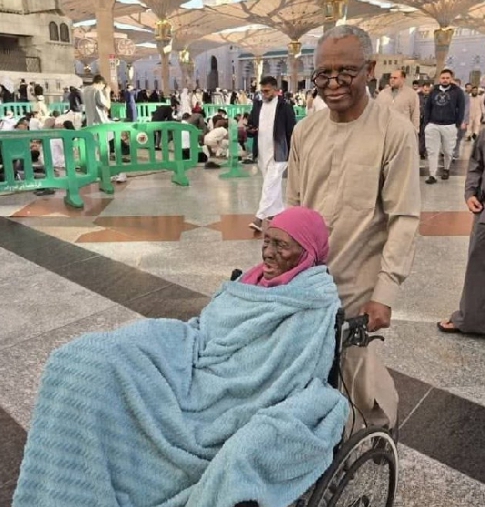
In a moment defined by both reverence and resolve, the Board of Trustees (BOT) has moved to honour the retirement of President N. D. Eyakndue, a towering spiritual figure who has reached the remarkable age of 100 and will turn 101 later this year.
The decision, according to the Board, is rooted not in disregard but in deep respect for a lifetime of tireless service. While acknowledging his enduring legacy, the BOT noted that the weight of leadership—particularly the rigours of decision-making—now calls for a dignified and peaceful transition.
Yet, beneath this carefully measured step lies a growing tension within the mission. Some close associates, including key cabinet members and even individuals within his family circle, are said to be resisting the move. They have been accused of urging the elderly leader to remain in office, allegedly driven by personal ambition and financial interests rather than concern for his wellbeing.
Within the church community, this development has stirred unease. Many faithful describe it as a painful contradiction—where loyalty appears to be overshadowed by self-interest. “At his age,” a concerned member observed, “true devotion should mean preserving his strength and honour, not placing further burdens upon him.”
History, however, offers a guiding light. The late Bishop J. U. Udom, the church’s first president, chose the path of honour by stepping aside before his passing—a decision that continues to command deep respect across generations. For many, President Eyakndue deserves a similar farewell: one marked by dignity, gratitude, and peace.
As voices across the mission grow stronger, the call is clear and heartfelt—that the revered leader should take a graceful bow and allow a new administration to carry forward the vision. The church, they insist, is a sacred trust, not a family possession.
Amid this transition, the BOT has also issued Mission Circular No. MZL/BOT/026/038, dated March 6, 2026, introducing significant changes to this year’s activities. Chief among them is the cancellation of the centralized Easter Convention traditionally held at Utu Edem Usung, the zonal headquarters of Ikot Ekpene Zone.
In its place, the 80th Easter Convention will be held across various Dioceses and Assemblies, each tasked with organizing its programmes in strict compliance with BOT directives. The move, the Board explained, is intended to give the emerging administration the space needed to stabilize and reposition the mission for the future.
The BOT also issued a firm warning against unauthorized financial demands, emphasizing that no levies have been approved for the convention. Dioceses, Assemblies, and special centres have been expressly directed not to remit any funds to the headquarters under any such claims.
These directives carry the full endorsement of the President, Mount Zion Lighthouse Full Gospel Church Incorporated, His Blessedness Bishop P. J. Udokang. Members have been cautioned to disregard any instruction not issued through the recognized leadership structure, as such communications will be considered null and void.
Clergy, elders, officers, and members have been called upon to remain steadfast, uphold the church’s constitution and bye-laws, and preserve unity in this delicate season of change.
As the mission stands at a defining crossroads, one message echoes with clarity and conviction: to honour the past, protect the dignity of its leaders, and step boldly into the future with faith, order, and unwavering integrity.
“No Room for Disorder, Tenure Elongation in God’s House” — Bishop Udoakang
In a candid and emotionally charged interaction with journalists, Bishop Peter Jumbo Udoakang has spoken out on leadership, discipline, and the future direction of Mount Zion Lighthouse Full Gospel Church, declaring that the church must not be a place where disorder or personal ambition thrives.
Reflecting on past events, the cleric recalled a troubling episode from 1978, when internal disagreements within the church escalated into chaos. According to him, arguments that began within church offices at Inyang spiraled out of control after being taken to family members.
“What leaders may overlook, their children may not,” he said soberly. “When the matter was reported to the man’s children, they stormed the church and attacked its officers. It was a painful moment in our history.”
In response, the late Bishop John Eshiet Ettefia took the unprecedented step of excommunicating not only the children involved but also their mother—an action Bishop Udoakang described as historic, though deeply instructive.
“He was the first to take such a firm stand. But as a preacher, I do not give room for such breakdown of order,” he added.
Delving into constitutional matters, Bishop Udoakang explained that the founding family had revisited the church’s original constitution, including amendments made in 1992 in conjunction with the Corporate Affairs Commission (CAC). He clarified that while past leaders served long tenures—some until their passing—the constitution does not mandate lifelong leadership without conditions.
“The constitution clearly states that a President can cease to function on health grounds,” he said. “It does not say anyone must remain in office until 100 years. That assumption was never part of the law.”
He expressed concern over what he described as attempts to unduly extend leadership tenure without commensurate impact.
“It becomes unacceptable when tenure is prolonged without visible progress. If leadership is to be sustained, there must be tangible achievements—especially in infrastructure and spiritual growth,” he stressed. “Within five years, a leader should be able to point to meaningful contributions.”
Recounting his own emergence as President, Bishop Udoakang revealed that he initially expected to retire at the age of 70, in line with common ecclesiastical practice.
“When the Board of Trustees approached me, I made it clear that I believe in orderly retirement. Even though the constitution allows up to 75 years, I committed myself to serving within a defined period of 10 years,” he said.
Looking ahead, the cleric unveiled an ambitious development agenda for the church. Top on his priority list is the construction of a Presidential Lodge—an initiative he described as long overdue for an institution that has existed for over eight decades.
“This church has existed for more than 80 years, yet there is no Presidential Lodge. My first assignment, before God and man, is to change that narrative,” he declared.
Beyond that, he outlined plans to establish functional convention centres across various locations, aimed at strengthening the church’s capacity for large gatherings and spiritual activities.
“This is not a season of self-enrichment,” he emphasized. “It is a time to serve, to build, and to leave a legacy that will speak even after we are gone.”
Bishop Udoakang also highlighted the importance of improving the welfare of ministers, noting that many clergy members currently operate without adequate support.
“No minister in God’s vineyard should lack basic facilities. They must have hope and dignity in service,” he said.
Drawing from his experience in the Uyo Diocese, he recounted how he met only two assemblies upon his arrival but worked to expand and strengthen the church’s presence across the region.
“Today, we have grown significantly, though about 40 percent of our assemblies are still developing. Growth must be intentional and sustained,” he noted.
He further recalled initiating land acquisition as far back as 2002, driven by a vision to build a convention centre that would accommodate the church’s expanding membership.
“I brought the elders together and shared the vision for expansion. Because of transparency, members trusted the process. Whenever funds were needed, they responded without delay,” he said with gratitude.
In a broader appeal, the cleric also called on pensioners in Akwa Ibom State to support Umo Eno in his efforts to deliver democratic dividends, emphasizing the need for collective responsibility in governance.
For many observers, Bishop Udoakang’s remarks reflect not only a firm stance on discipline and constitutional order but also a deep commitment to reform, unity, and purposeful leadership within the church.