
By Gregory Tav
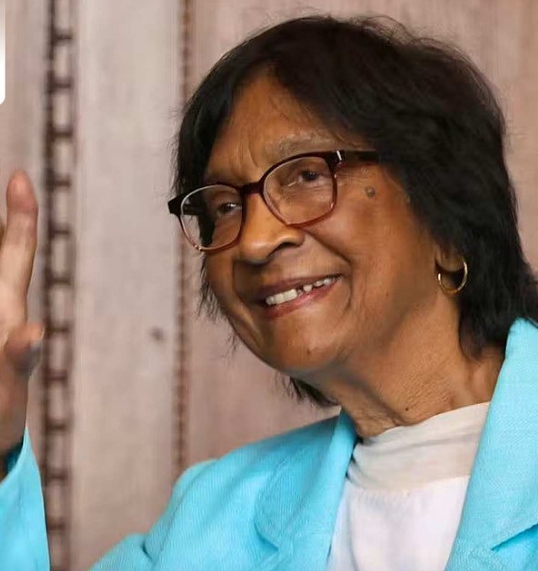
The 2026 Nobel Peace Prize has been awarded to South African jurist Navanethem “Navi” Pillay for her lifelong efforts to promote peace and international law, the Norwegian Nobel Committee announced on Friday.
The Committee said the 85-year-old was honoured for her instrumental role in ensuring that war crimes, crimes against humanity and genocide are prosecuted, at a time when the international legal order is under severe strain.
“At a time of existential challenges – including more wars and conflicts than the world has seen in a long time – international law is no longer just a supplement to peace and security. It is an absolute necessity,” the Committee said in its citation.
Committee Chairman, Jorgen Watne Frydnes said the system of international law is “under tremendous pressure” and its institutions are “under attack.” It is judges, he said, “who guard the thin red line between order and chaos.”
Pillay, who is currently serving as a judge on the International Court of Justice (ICJ) in a case in which Myanmar stands accused of genocide, becomes the fifth South African to win the Nobel Peace Prize. She will receive a medal, diploma and 12 million Swedish kronor at a ceremony in Oslo on December 10.
Reacting to the news from the historic courtroom in Nuremberg, Germany where Nazi leaders were tried after World War II, Pillay said she would dedicate the award to “all of the survivors of international crimes.”
“Perhaps it was meant to be that I was in this historic courtroom when the announcement was made,” she said.
Pillay’s career spans more than five decades. Born in 1941 in Durban into a family of Indian Tamil origin, she grew up under apartheid. In 1967 she became the first woman to open a law practice in Natal Province, where she defended anti-apartheid activists and exposed torture in prisons, including winning legal rights for prisoners on Robben Island.
She later became South Africa’s first non-white woman High Court judge, before serving as a judge and President of the International Criminal Tribunal for Rwanda. There she presided over a landmark judgment that established rape as an act of genocide.
She subsequently served as a judge at the International Criminal Court from 2003 to 2008 and as UN High Commissioner for Human Rights from 2008 to 2014.
In recent years, Pillay chaired the UN Independent International Commission of Inquiry on the Occupied Palestinian Territory, which last year concluded that Israel was responsible for genocide in Gaza with specific intent to destroy Palestinians in Gaza.
“The last thing I did is the delivery of the report on Gaza, naming what’s happening there as genocide,” Pillay said Friday. “One of the main reactions to that report is paying tribute to me for my courage. And you can imagine how surprised I was. Why would you need courage to speak the truth?”
The decision has drawn sharp criticism from Israel, which accused Pillay of “relentless, politically motivated demonization of Israel” and dismissed her commission’s Gaza report as “scandalous.”
The Nobel Committee defended its choice, noting that Pillay has demonstrated “judicial rigour, personal integrity and considerable courage” from defending Nelson Mandela to prosecuting the gravest crimes of our time.