
By Dr. Usen Inyangmme
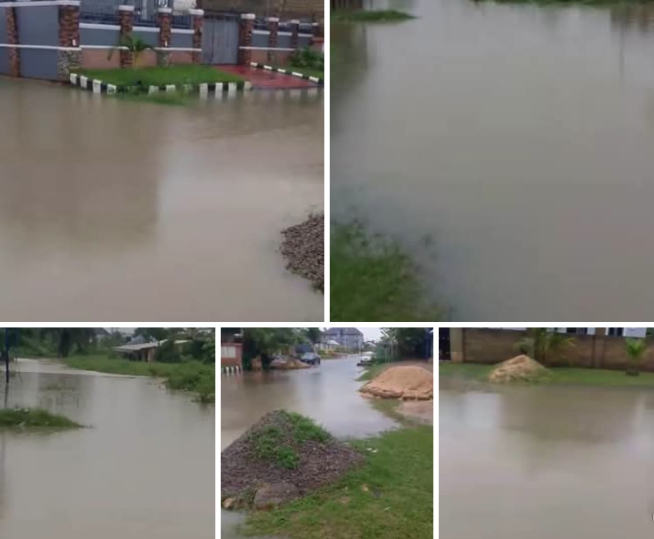
The devastating floods that have affected many communities across Akwa Ibom State during the 2026 rainy season have once again exposed a challenge that has been building over many years. Lives have been lost, families displaced, businesses disrupted, roads destroyed, and public infrastructure damaged. In communities across Uyo, Abak, Eket, Oron, and several other towns, many residents watched helplessly as floodwaters submerged homes, schools, markets, and farmlands.
Recent reports also indicate that the Akwa Ibom State Government has begun emergency interventions while promising longer-term flood mitigation measures.
While heavy rainfall is a natural occurrence, disasters of this magnitude are rarely caused by rainfall alone. More often than not, flooding becomes catastrophic because of poor physical planning, blocked drainage channels, uncontrolled urban development, construction on natural waterways, indiscriminate waste disposal, inadequate stormwater infrastructure, and weak enforcement of development control regulations. These are issues that fall squarely within the responsibilities of professionals in the built environment.
As town planners, we understand that every town grows within a natural landscape. Rivers, streams, wetlands, floodplains, and natural drainage paths all perform important environmental functions. When buildings are erected on these natural channels or drainage systems are neglected, floodwater simply finds another route—usually through people’s homes and businesses. Nature always reclaims its pathways.
The increasing frequency and intensity of rainfall, influenced by climate variability, have made the situation even more challenging. The Nigerian Meteorological Agency (NiMet) and the Nigeria Hydrological Services Agency (NIHSA) identified Akwa Ibom among states vulnerable to flooding during the 2026 rainy season, with urban centres such as Uyo, Eket, and Oron highlighted as areas requiring close attention.
The solution therefore goes beyond emergency evacuation after every heavy rainfall. It requires deliberate planning before development takes place. Prevention is always more effective and less expensive than rebuilding damaged infrastructure after disasters.
The State Government deserves recognition for responding to the immediate needs of affected communities and mobilising contractors to clear stormwater following recent flooding.
However, emergency response should be complemented with long-term planning and sustainable urban management.
This is where professional town planners and other built environment experts—including civil engineers, architects, surveyors, environmental managers, hydrologists, geologists, and estate surveyors—have a critical role to play. Their technical knowledge should not only be consulted during crises but should guide development policies from the outset.
There is an urgent need for comprehensive drainage master plans for our growing towns, regular desilting of existing drains, protection of natural floodplains, enforcement of development control regulations, and continuous updating of physical development plans. New residential layouts should undergo proper environmental impact assessments, while public infrastructure should be designed with future climate conditions in mind rather than historical rainfall patterns alone.
Corporate organisations also have an important responsibility. As beneficiaries of the State’s economic environment, they can support flood resilience through corporate social responsibility initiatives such as drainage improvement projects, environmental awareness campaigns, community sanitation programmes, and support for flood-risk education.
Private citizens equally have a role to play. Many drainage systems become ineffective because they are used as refuse dumps. Illegal structures are often erected across drainage channels, while wetlands are reclaimed without proper technical assessment. Flood management is therefore a shared responsibility between government and the people.
Experience from many countries has shown that successful flood management depends on collaboration among government, professionals, communities, and the private sector. Decisions about land use, infrastructure investment, housing development, and environmental protection must be based on sound scientific and professional advice rather than short-term convenience.
As professionals in physical planning, we are not merely regulators of development we are partners in creating safer, healthier, and more resilient communities. Listening to professional advice is not an unnecessary bureaucratic process—it is an investment in protecting lives, preserving infrastructure, and safeguarding economic development.
The recurring floods in Akwa Ibom State should therefore serve as a turning point. Rather than rebuilding after every rainy season, we must begin building wisely. The cost of prevention will always be far lower than the cost of repeated destruction.
The future of our towns depends not only on how fast they grow but also on how well they are planned. Sustainable development begins with proper planning, and proper planning begins by listening to qualified professionals.
Dr. Usen Inyangmme is the Vice Chairman,
Nigerian Institute of Town Planners, Akwa Ibom State Chapter