
By Chucks Nwonye
Amnesty International has strongly condemned the alleged blockade of the presidential candidate of the opposition NDC, Mr. Peter Obi, by suspected political thugs in Benue State, describing the incident as a “reckless and unlawful” assault on democracy and citizens’ fundamental rights.
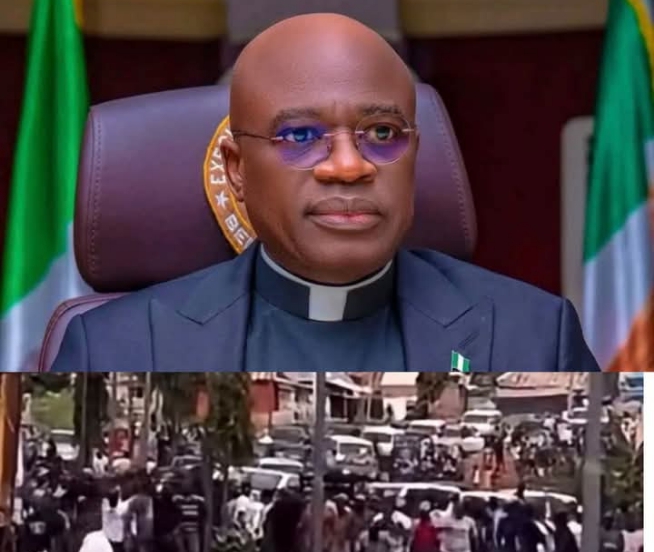
In a statement issued on Tuesday, the global human rights organization said heavily armed youth barricaded Gboko Road in Makurdi, the Benue State capital, preventing Obi and members of his entourage from entering the state. Amnesty said the action appeared to be a coordinated plan that endangered the lives of the opposition candidate and his supporters.
“No Nigerian needs anybody’s permission or prior notification to visit any part of the country — at all times. No state is a no-go area for any person or supporters of any political party,” the organization stated.
Amnesty International said the Benue State Government “has questions to answer for this brazen act of political repression.”
According to the group, the use of political thugs and what it termed “state-endorsed armed vigilante groups” to harass rival candidates violates the Nigerian Constitution and international human rights norms on freedom of movement and association.
“What happened today in Benue state is an unprecedented and dangerous act of political hooliganism that undermines the entire democratic process,” the statement read, noting further that “Harassment of rival candidates by state-endorsed armed vigilante groups or thugs is unlawful.”
Eyewitnesses in Makurdi told our correspondent that the Gboko Road blockade caused significant traffic disruption for several hours on Tuesday, with commercial drivers and commuters forced to seek alternative routes. As of press time, the Benue State Government had not issued an official statement on the incident.
Amnesty said the Makurdi blockade fits into a broader pattern of political intolerance it has been monitoring since last year.
The organization said it has documented a “shocking level of political repression” across several states, including cases where hotels were pressured to cancel bookings for opposition meetings, direct attacks on campaign activities of rival parties, and other actions that undermine a level playing field.
“Alarming intolerance, incitements and other efforts to undermine democracy must be decisively addressed now,” Amnesty warned. “When opposition voices are silenced through intimidation, the credibility of elections is put at serious risk.”
The rights group also criticized the Nigerian Government for failing to curb political violence and repression.
“We are seriously concerned that the Nigerian Government is doing very little to prevent political repression and violence,” Amnesty stated.
“Some states have been implementing an unpronounced policy of using all means of shutting out any political opposition.”
It further decried “the failure of the relevant authorities to investigate and bring to justice the suspected perpetrators of such acts,” arguing that impunity continues to encourage the use of thuggery in politics.
Constitutional lawyers note that Sections 40 and 41 of the 1999 Constitution guarantee every Nigerian the right to freedom of association and freedom of movement anywhere in the country.
In its recommendations, Amnesty International urged all political parties and candidates to reject violence and make “anti-violence and thuggery stance a clear and integral part of their elections campaign.”
The organization called on the Inspector-General of Police, the Department of State Services, and the National Human Rights Commission to launch an immediate and independent investigation into the Gboko Road incident and to provide adequate protection for all political actors.
“Democracy thrives when there is tolerance, fairness and respect for the rule of law,” Amnesty concluded. “No part of Nigeria should be declared a no-go area for any citizen or political party.”