
…as Sadiq’s Bill passes second reading
– Legislation seeks to repeal 2004 law, empower NAFDAC, and seize assets linked to counterfeit medicine trade
By Sanni Abdullahi
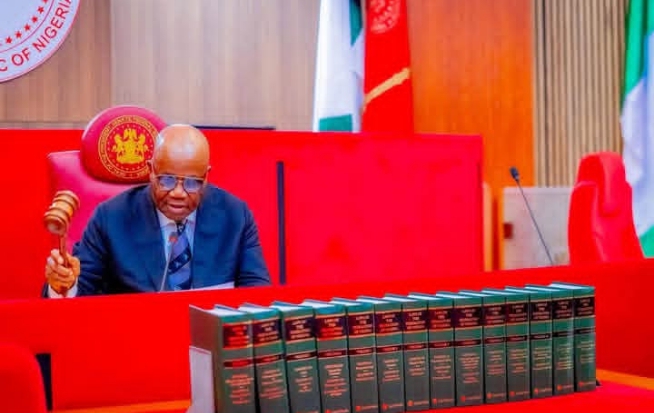
ABUJA — The Senate on Wednesday, July 8, 2026, passed for second reading a bill that proposes tougher sanctions against manufacturers, importers and sellers of counterfeit medical products, fake drugs and unwholesome processed foods in Nigeria.
Sponsored by Senator Sadiq Suleiman Umar representing Kwara North Senatorial District, the Counterfeit Medical Products, Fake Drugs and Unwholesome Processed Foods (Prohibition and Control) Bill, 2026, seeks to repeal the existing 2004 law and replace it with what lawmakers described as a more robust legal framework to tackle evolving threats in the nation’s pharmaceutical and food supply chains.
Leading the debate on the floor, Senator Sadiq said the bill was necessitated by the rising health risks posed by counterfeit medicines and unsafe processed foods, as well as the sophistication of criminal networks behind the trade.
“This bill is intended to protect Nigerians from the dangers of fake medicines and other unsafe products while strengthening the capacity of regulatory authorities to combat the activities of counterfeit drug syndicates,” Sadiq told his colleagues.
He continues: “The 2004 law no longer reflects the realities we face today. We need stronger deterrents, better enforcement tools, and a legal regime that takes away the profit from this crime.”
Key provisions of the bill
A central part of the proposed legislation is the outright criminalisation of drug hawking and the sale of medicines in unauthorised locations. The bill specifically names open markets, motor parks, roadside stalls and other unlicensed outlets as prohibited places for the sale of drugs.
Offenders convicted under the new law would face a jail term of up to 15 years for offences relating to the manufacture, importation, distribution or sale of counterfeit medical products and fake drugs.
In addition to imprisonment and monetary penalties, the bill introduces asset forfeiture. It provides for the seizure and forfeiture to the Federal Government of assets and proceeds derived from counterfeit drug-related offences. The aim, according to the sponsor, is to dismantle the financial structures that sustain the illicit trade and ensure that offenders do not benefit from their crimes.
The legislation also seeks to enhance the enforcement powers of the National Agency for Food and Drug Administration and Control, NAFDAC. The agency would be granted improved surveillance powers, stronger product tracking mechanisms, and broader regulatory oversight to monitor the movement of drugs and processed foods from production to point of sale.
Proponents of the bill argued that NAFDAC’s current mandate under the 2004 law has been stretched by new methods of distribution, including online sales and cross-border smuggling, which require updated legal backing.
Why the law matters now
Counterfeit medicines have remained a major public health concern in Nigeria for decades. Health experts have linked fake and substandard drugs to treatment failures, drug resistance and avoidable deaths, particularly for malaria, antibiotics and chronic disease medications. The sale of drugs in open markets and by itinerant hawkers has also made it difficult for regulators to trace sources and recall unsafe products.
By targeting both the supply side and the distribution channels, the new bill attempts to close loopholes that have allowed counterfeiters to operate with relative impunity. The inclusion of asset forfeiture mirrors global best practices aimed at hitting criminal enterprises where it hurts most: their finances.
…next steps
After the debate, the Senate referred the bill to the Committee on Health (Secondary and Tertiary) for further legislative scrutiny. The committee is expected to conduct a public hearing, engage stakeholders including NAFDAC, pharmacists, manufacturers and civil society, and report back to the chamber with recommendations.
If passed into law, the legislation would replace the Counterfeit and Fake Drugs and Unwholesome Processed Foods (Miscellaneous Provisions) Act of 2004, which currently prescribes less severe penalties and does not explicitly provide for asset seizure.
Senator Sadiq has urged Nigerians to support the bill, noting that access to safe and quality medicines is a fundamental right. “We cannot build a healthy nation on the back of fake drugs,” he said. “This law is about saving lives.”
The bill will return to the Senate for third reading after the committee submits its report.